
“The moment I witnessed was not prompted. There were no cameras. No TikTok being made to inflate any egos. It was simply watching a slice of life and seeing how beautiful humanity can be when people practice what they preach.”
Our next stop was Fes with our tour guide Hakkim. This was by far my favorite day of our trip, not to say every day wasn’t awesome, but this one really stuck out to me for so many reasons.
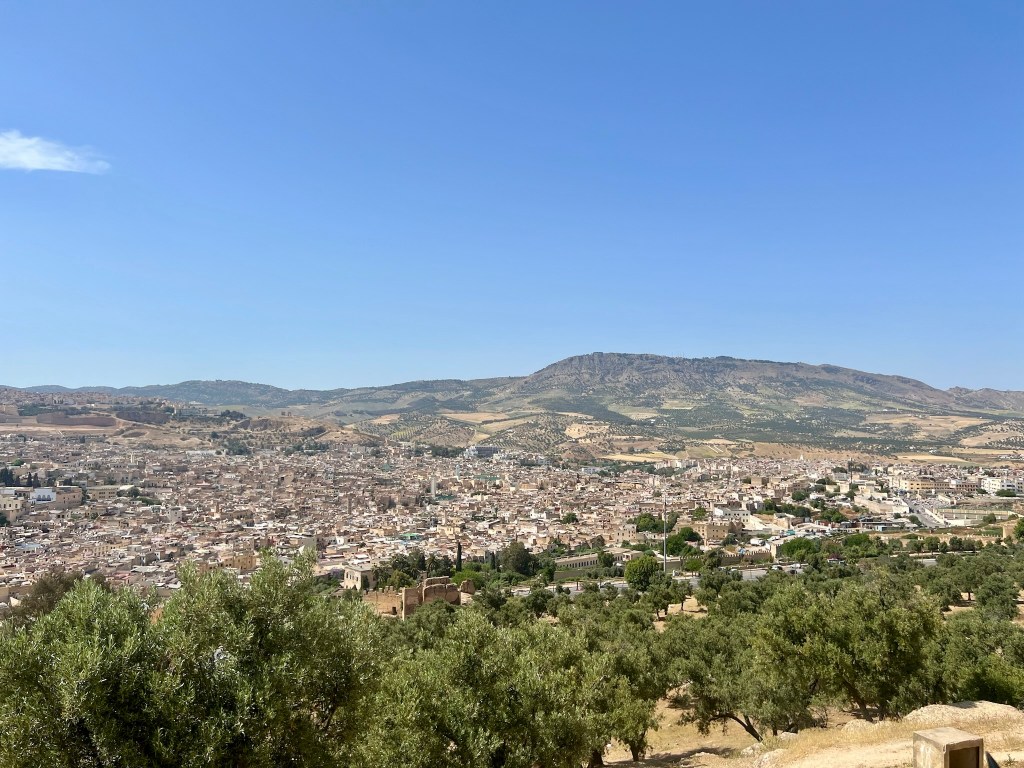
The city consists of two old medina quarters, Fes el-Bali and Fes Jdid, and the much larger modern urban Ville Nouvelle area founded during the French colonial era.
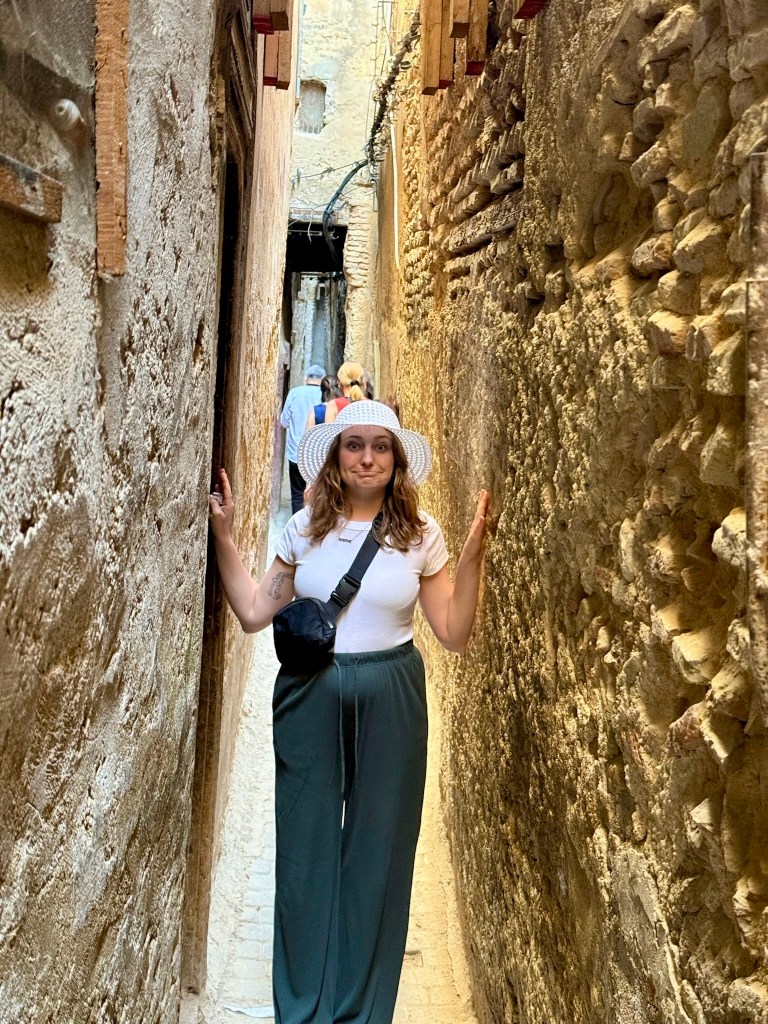
The Medina of Fez is a UNESCO World Heritage Site and is one of the world’s largest and oldest urban pedestrian zones. It was formed in 808 AD with a labyrinth of over 9000 narrow streets, alleyways, and lanes in 82 hectares. It is a densely populated, residential area with over 150,000 inhabitants. The labyrinth was designed to keep invaders and colonizers from finding their way in the maze.
In 1276 the Marinid sultan Abu Yusuf Yaqub also founded the royal administrative district of Fes Jdid, where the Royal Palace (Dar al-Makhzen) is still located today. During this period the Jewish population of the city grew and the Mellah (Jewish quarter) was formed on the south side of this new district. The Jewish population comes from 2 different categories – The indigenous Berger Jews and The Saffardic Jews from Spain around 1492. A lot of the Jewish population left for economic reasons after the French came and took over businesses.

Of course like all major religions, there are many similarities, especially between Judaism and Islam. For example the food being kosher vs halal, no cremations, and even the Hamsa hand symbol.
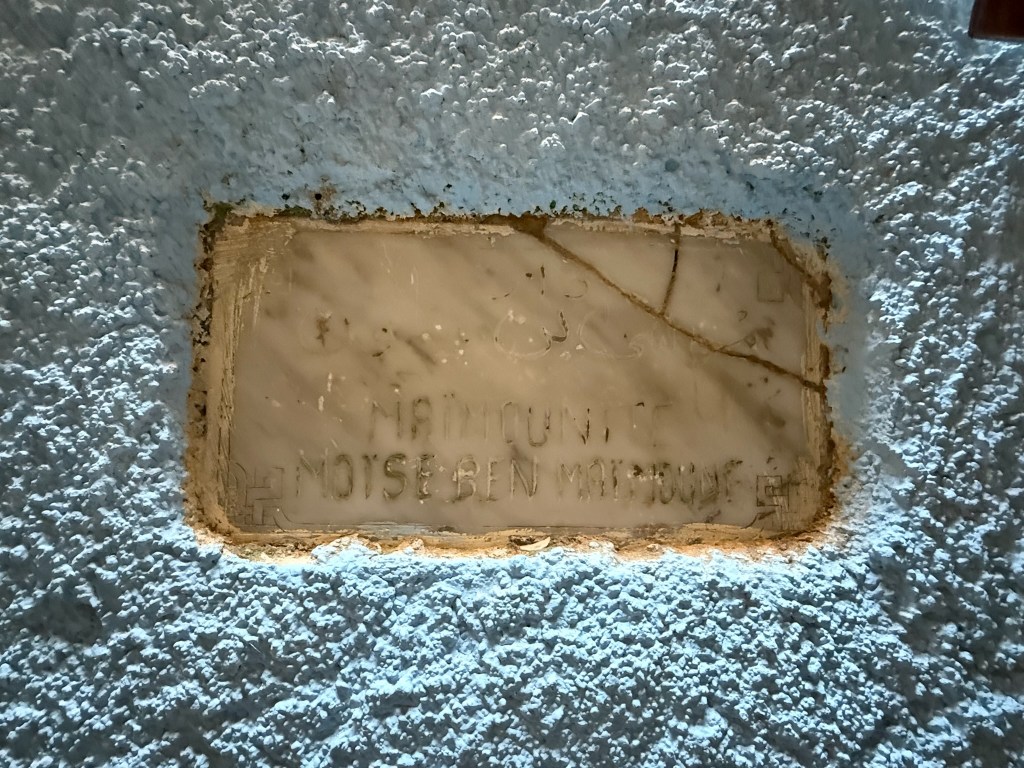
We visited a 17th century synagogue in the Jewish Quarter, where Maimonides (Moses ben Maimon), Sephardic rabbi and philosopher who became one of the most prolific and influential Torah scholars of the Middle Ages lived. It is actually in Fes where Mainmonides wrote “The Guide for the Perplexed,” a philosophical work harmonising and differentiating Aristotle’s philosophy and Jewish theology. Written between 1186 and 1190. You may recognize Maimonides name from the name of the hospital in Brooklyn. Yes it is the same one.
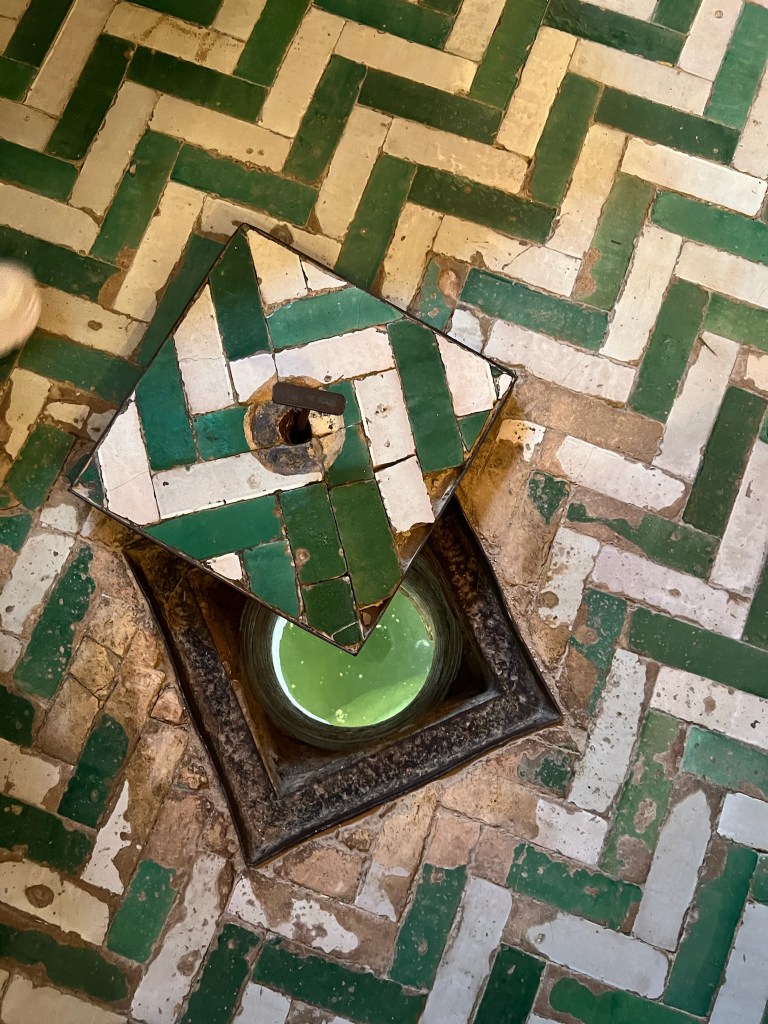

The synagogue also still had its original Torah made with 15 meters of deer skin as well as its mikvah, a Jewish ritual bath used for purification, particularly after menstruation, childbirth, and conversion to Judaism. It’s a pool of natural water where individuals immerse themselves to cleanse and become ritually pure.
The medina also contains the University of al-Qarawiyyin which was founded in 857 AD and is the oldest continuously functioning institute of higher education in the world. The university was founded by Fatima Al-Fihri, a Muslim woman, scholar and philanthropist. Originally it accepted people of both genders. In order to be accepted into the university you had to recite the entire Quran from memory, which has 6232 verses. Best I could do is the 10 minute version of All Too Well (Taylor’s Version). This is also the first place where the number zero was taught and they had braille within the Mosque for the visually impaired.
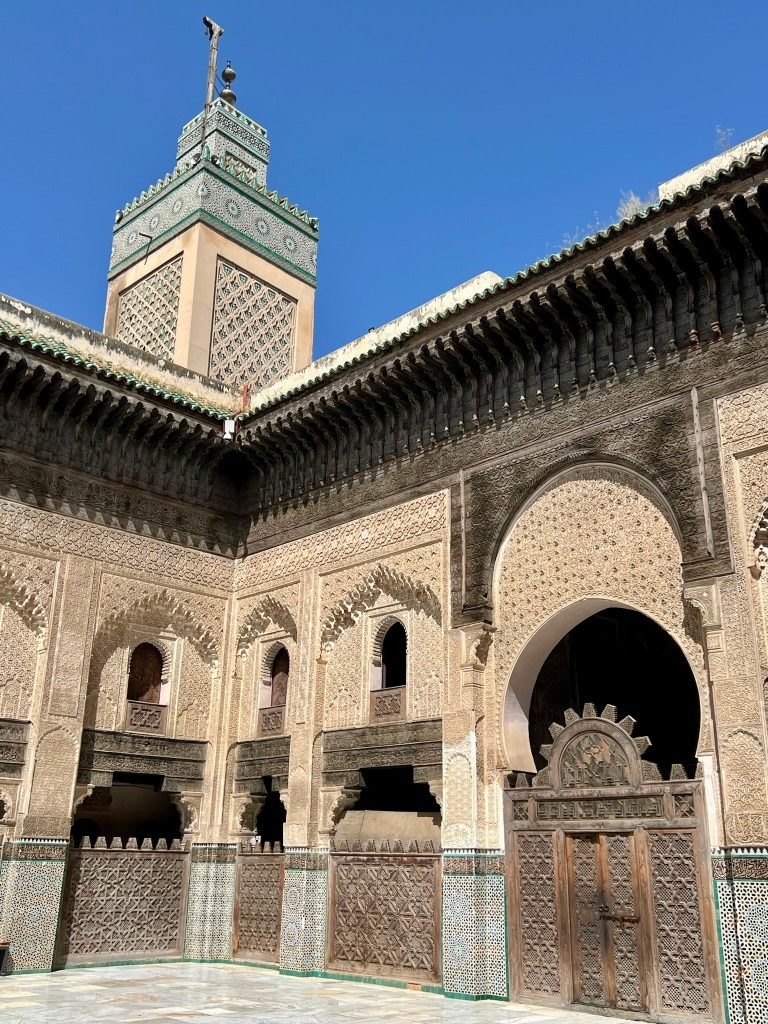
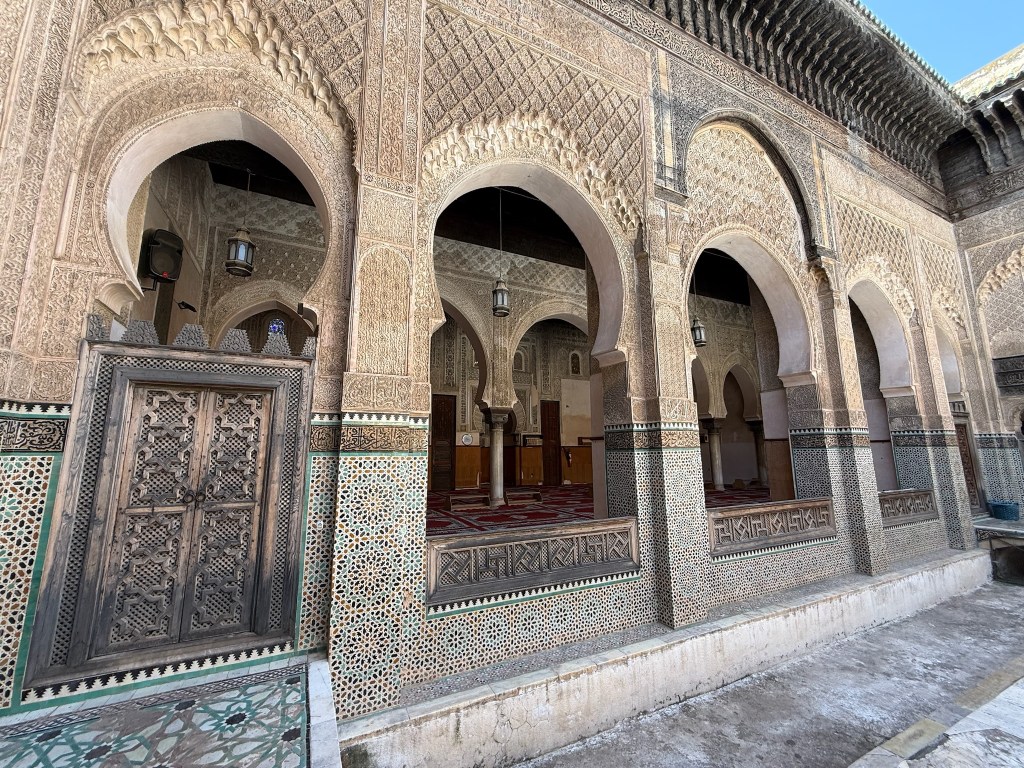
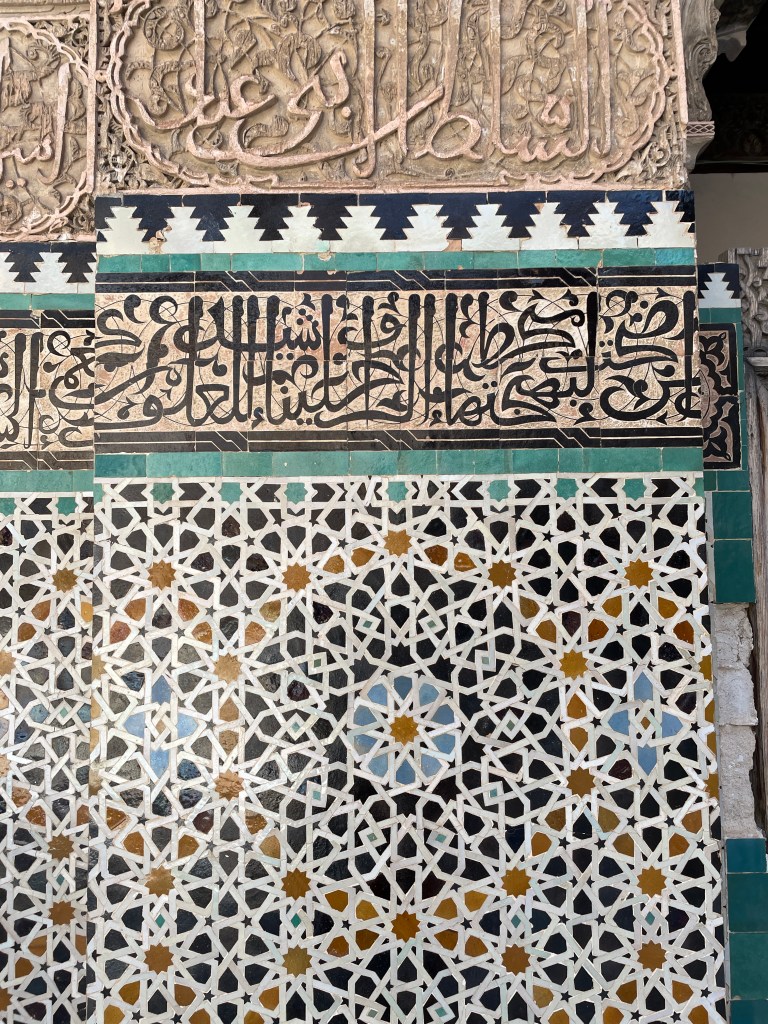

Inside the university and throughout Morocco the tile work and art puts a lot of meaning into numerology and colors. Typically green represents Islam and fertility, white represents purity and innocence, black represents the mystery of life, blue represents freedom, and yellow represents sun and life. I talked a lot about the number 7, but also the number 12 appears frequently – 12 zodiacs in astronomy, 12 months in a year, etc.
Fes of course also has communal ovens. Each family has their own unique trays, so you could tell who someone was based on their bread and trays. A lot of times the bakers used to be match makers since they could tell people which women made the best bread. Honestly sounds way better than Hinge.

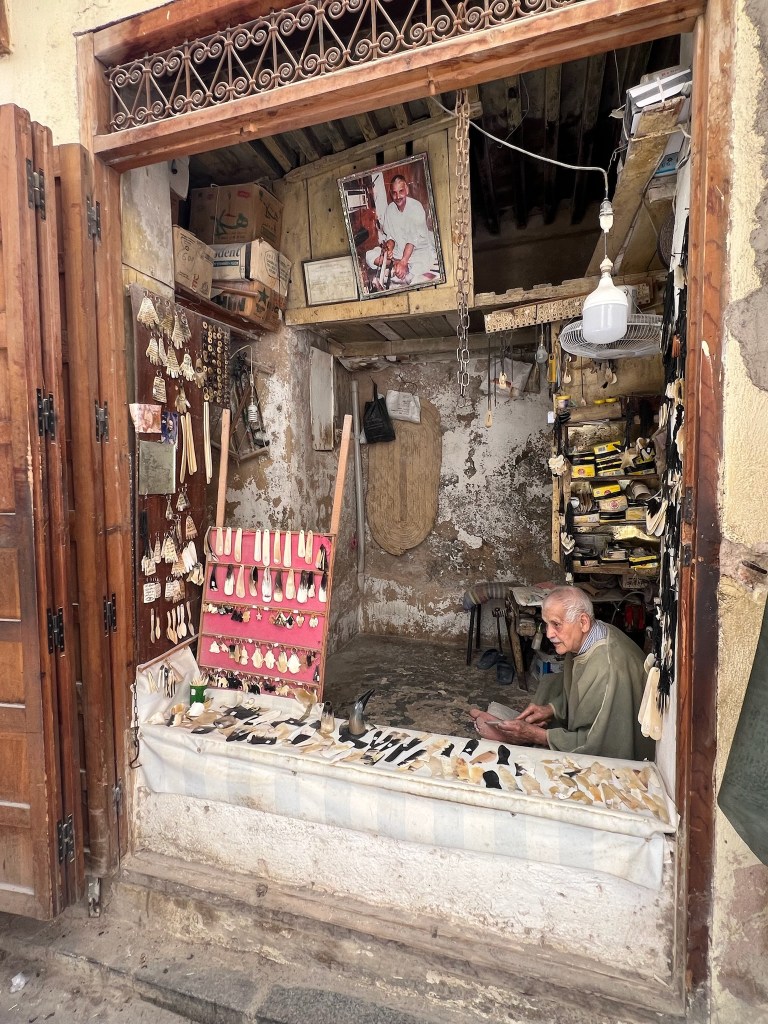
There are numerous squares throughout the medina that are named based on the artisan craft made there, including brass square, weaving square, and metalworks square. It also contains the Chouara Tannery from the 11th century, one of the oldest tanneries in the world. At the tannery they used pigeon poop to this day as it contains natural ammonia. It smells awful as you can imagine. We also went outside the medina to tour a ceramics and tile making shop. The artisans here are still using techniques from generations past. All artisans in the photographs have given consent to be photographed.
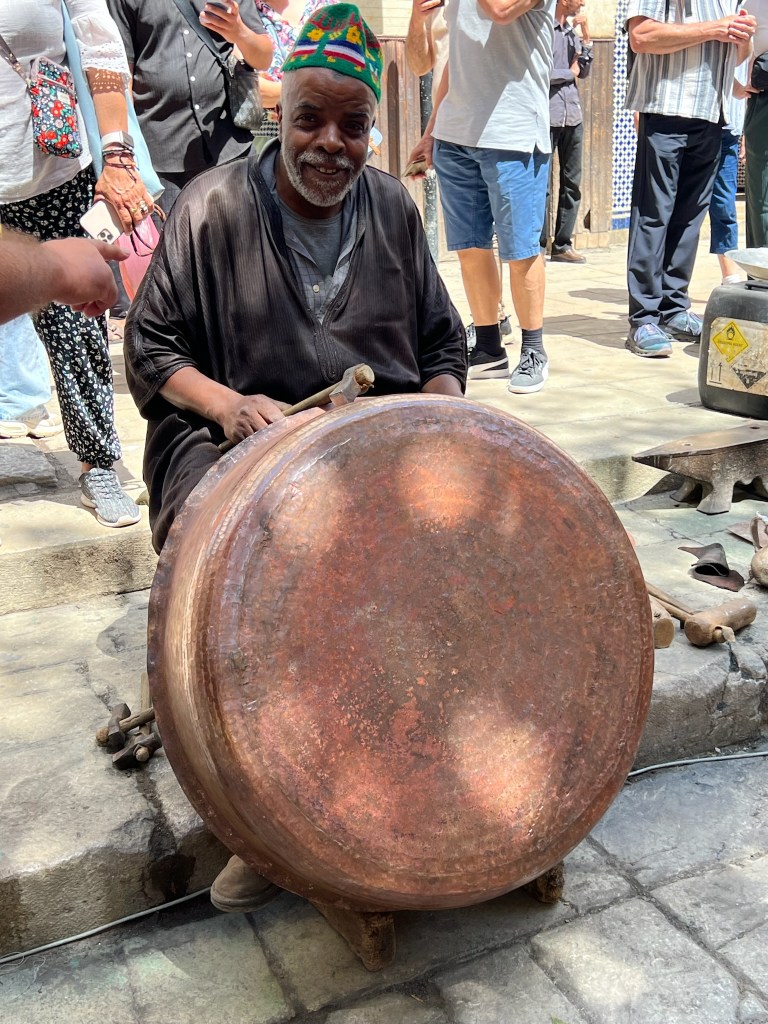
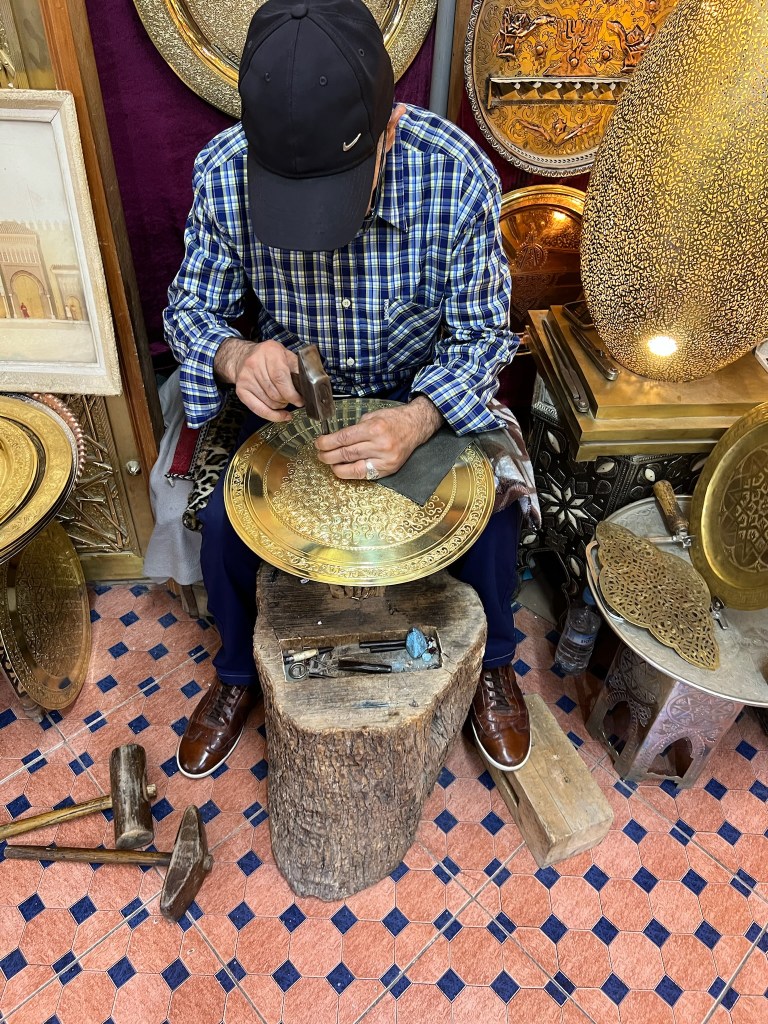
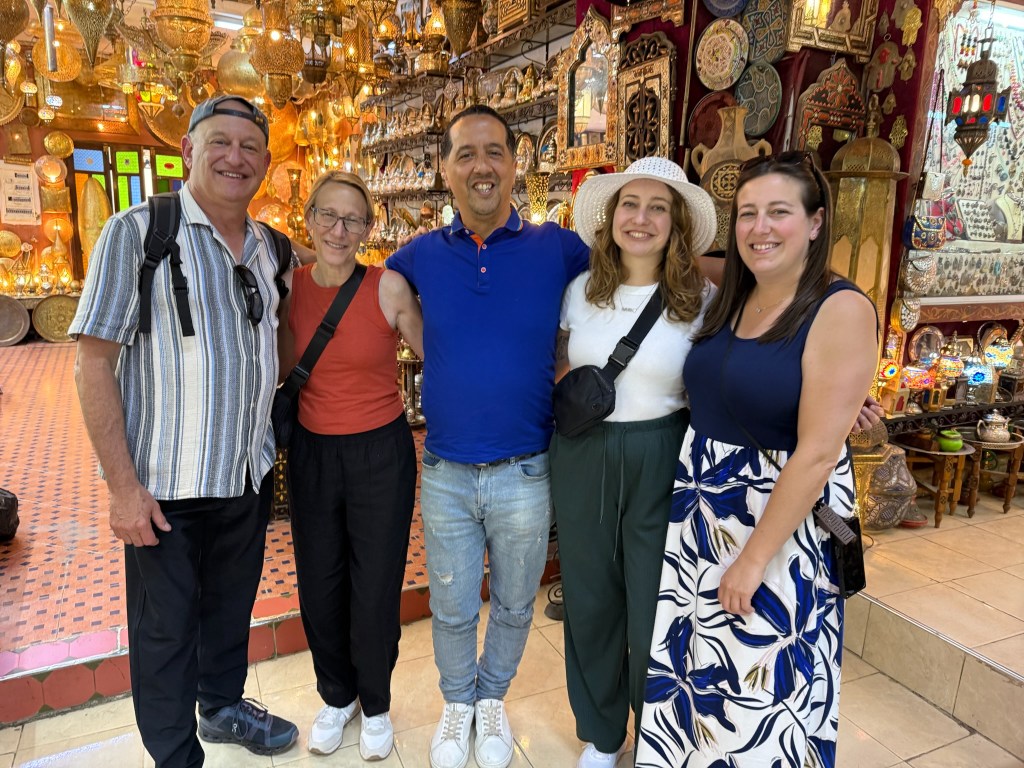
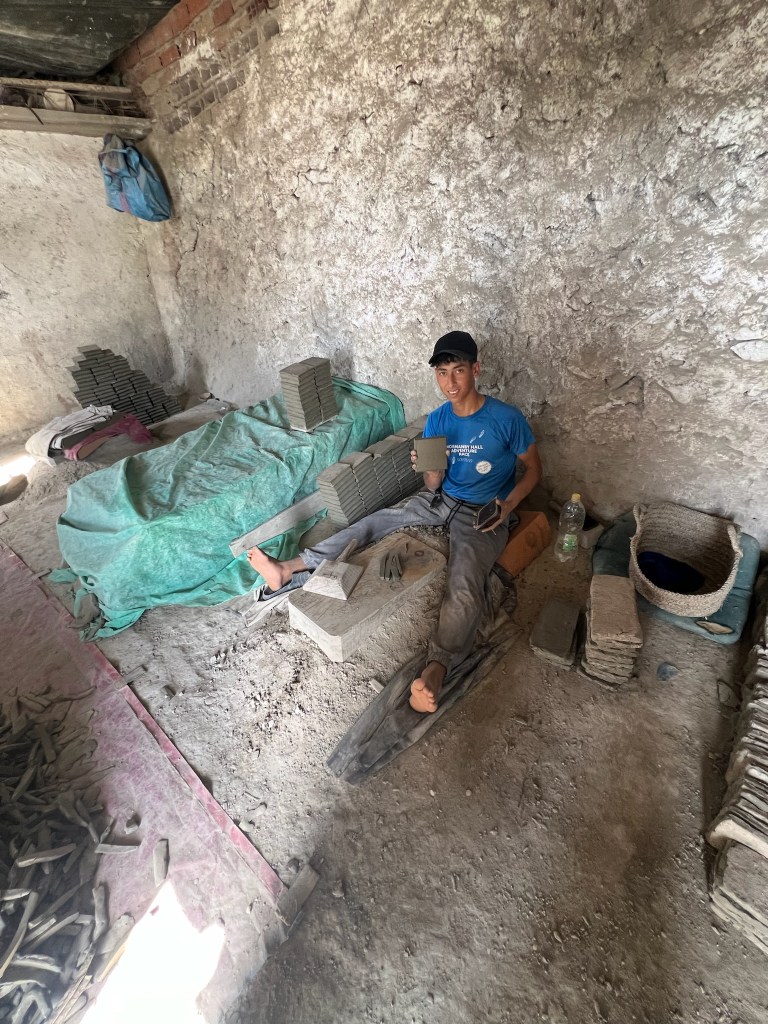
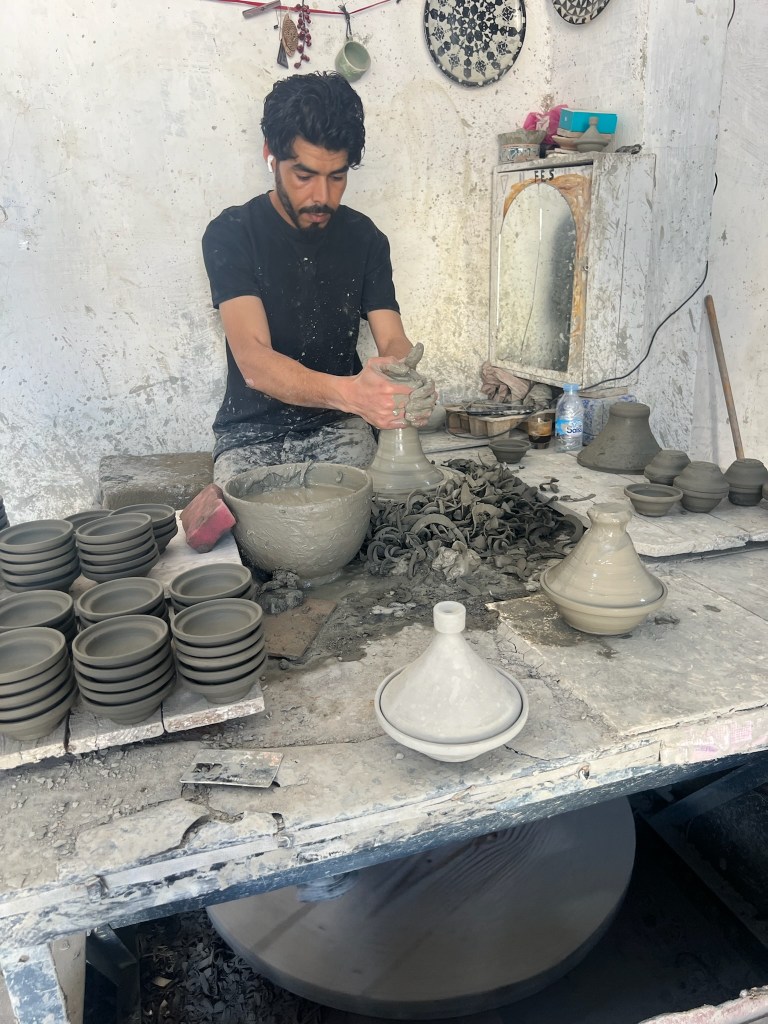
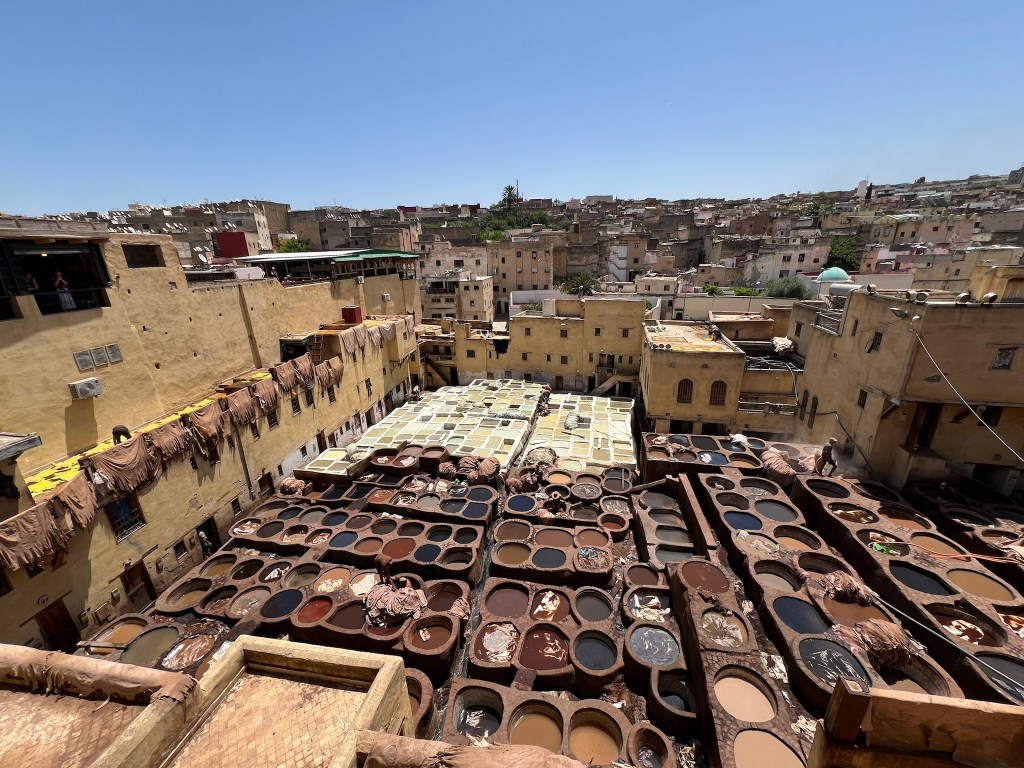
If you are traveling to Morocco, make sure you are buying crafts from the natives and not the fake cheaper knockoffs in the streets.
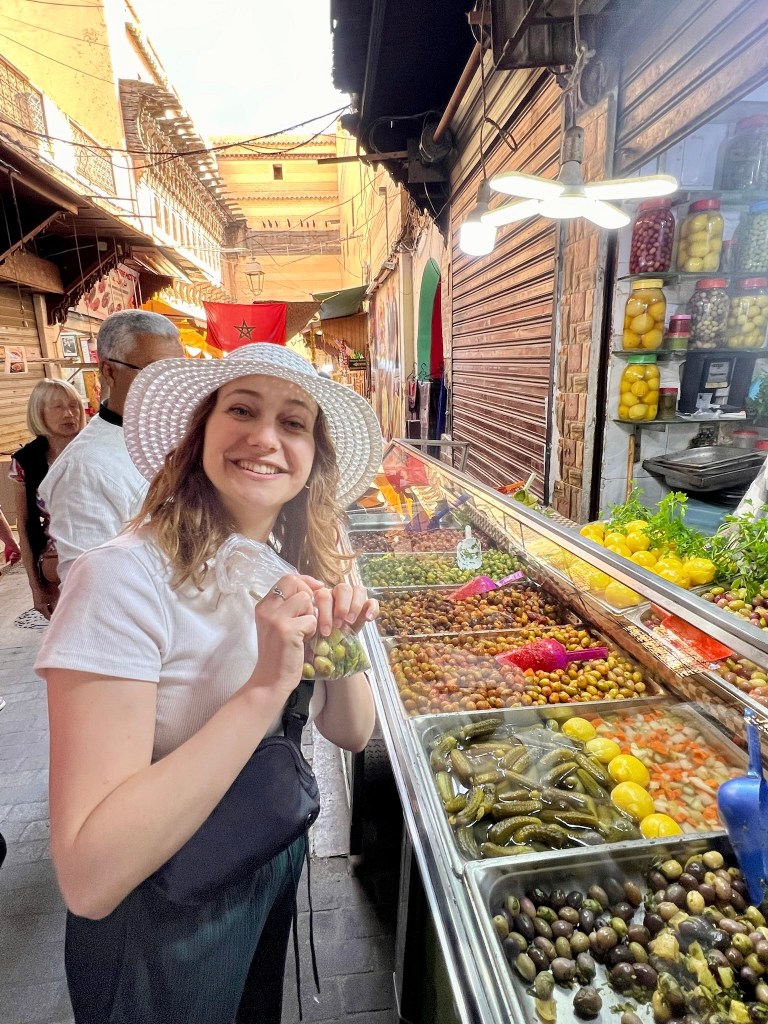
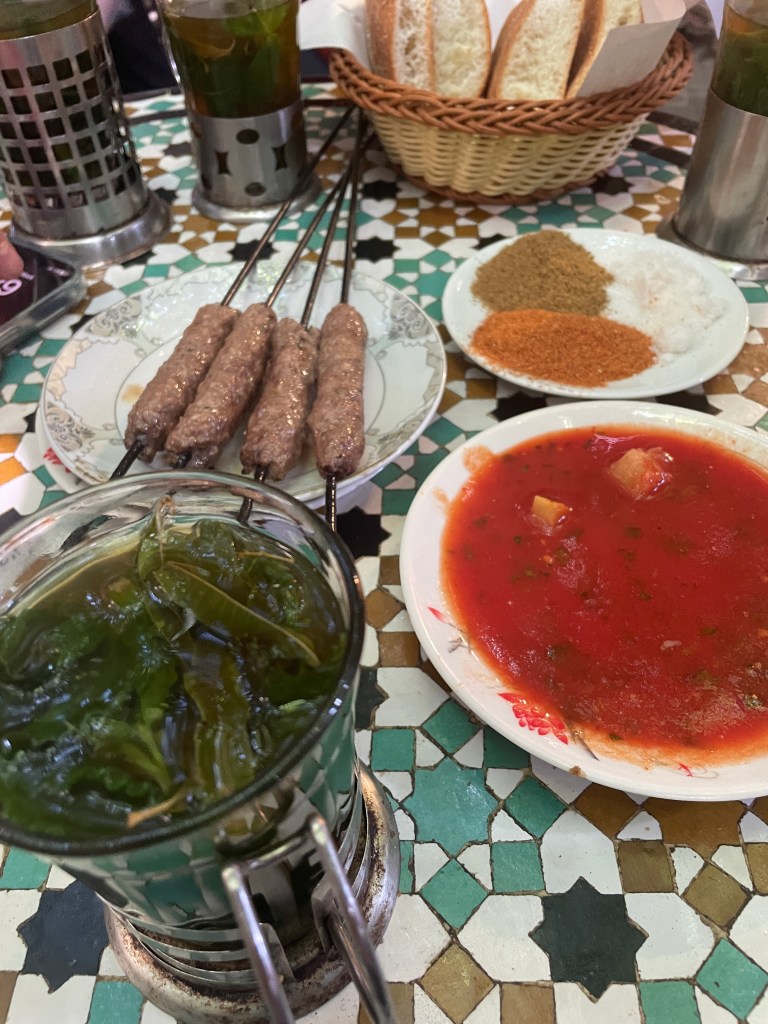
The whole tour also included food stops throughout. Here is everything we ate along the way from stalls in the medinas. I am absolutely in love with the food here!
🧀 Homemade goat cheese
🌰 Figs with walnuts
🍞 Meloui (Moroccan flatbread)
🥔 Maakouda (fried potatoes with spices)
🥖 Harsha (semolina flatbread)
🫓 Warqa (Moroccan pastry dough)
🫒 Olives with oil and cilantro
🥮 Briwat (almond paste deep fried and dipped in honey)
🥮 Chebakia (spiced dough – cinnamon, anise and orange blossom) fried and soaked in honey with sesame seeds)
🐑 Kefta (lamb w/ mix of spices dipped in tomato oil with chili and cilantro)
🫛 🥣 Bissara (fava bean soup with oil and garlic)
🍯 Honey made with fig and herbs


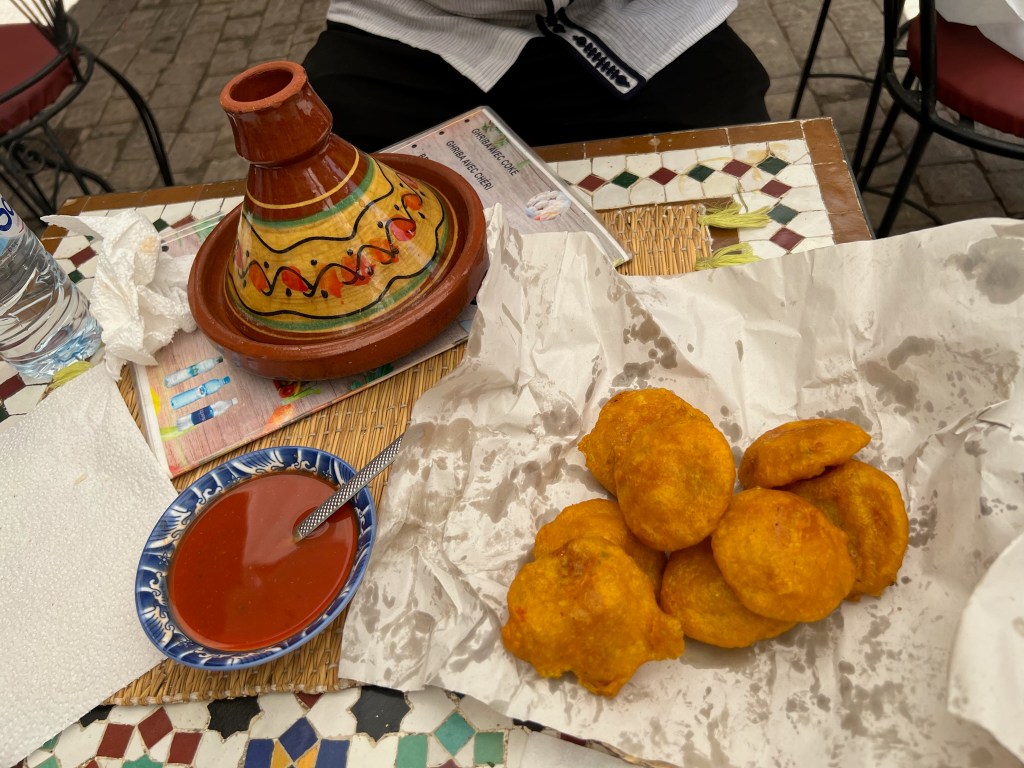
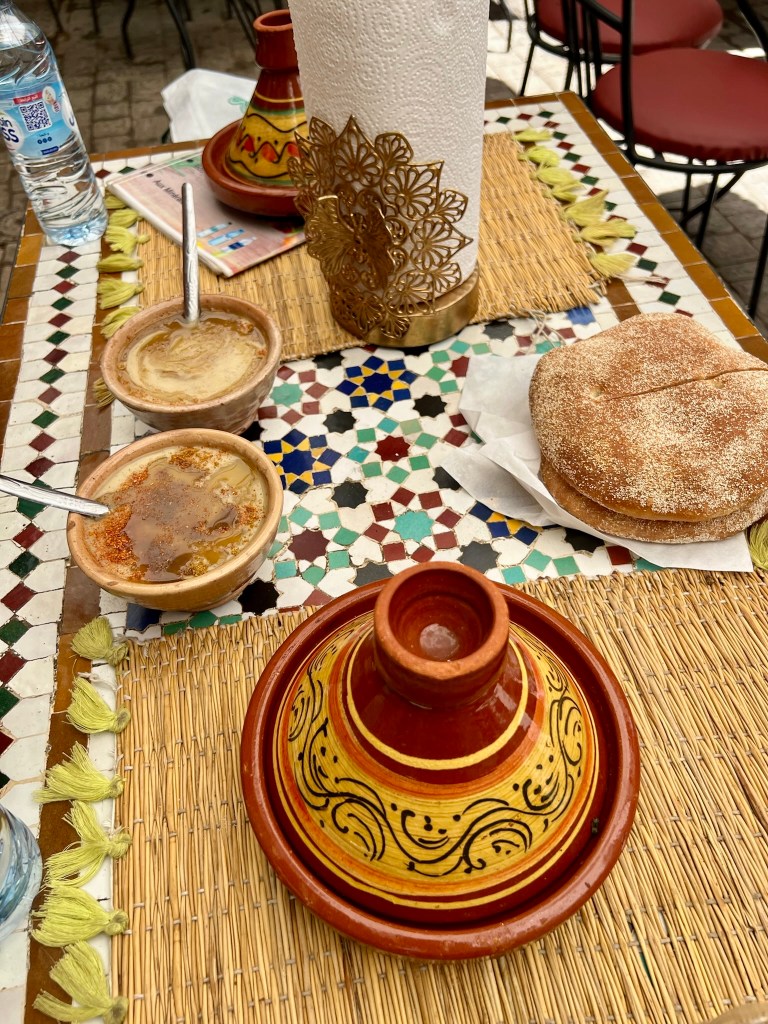
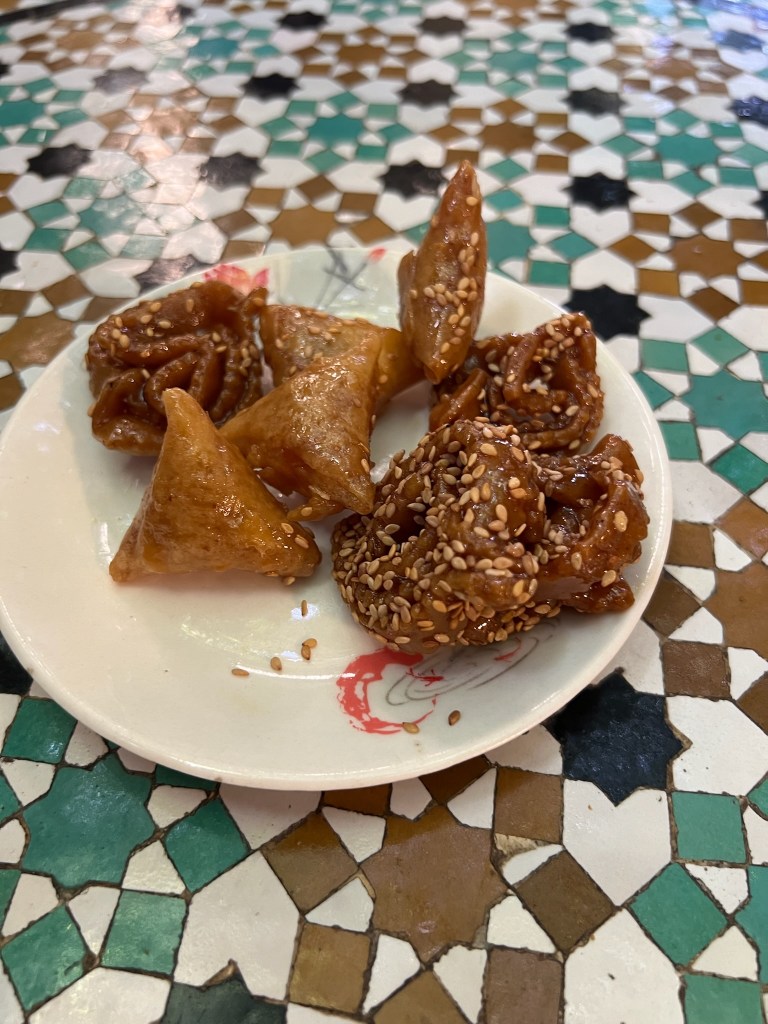
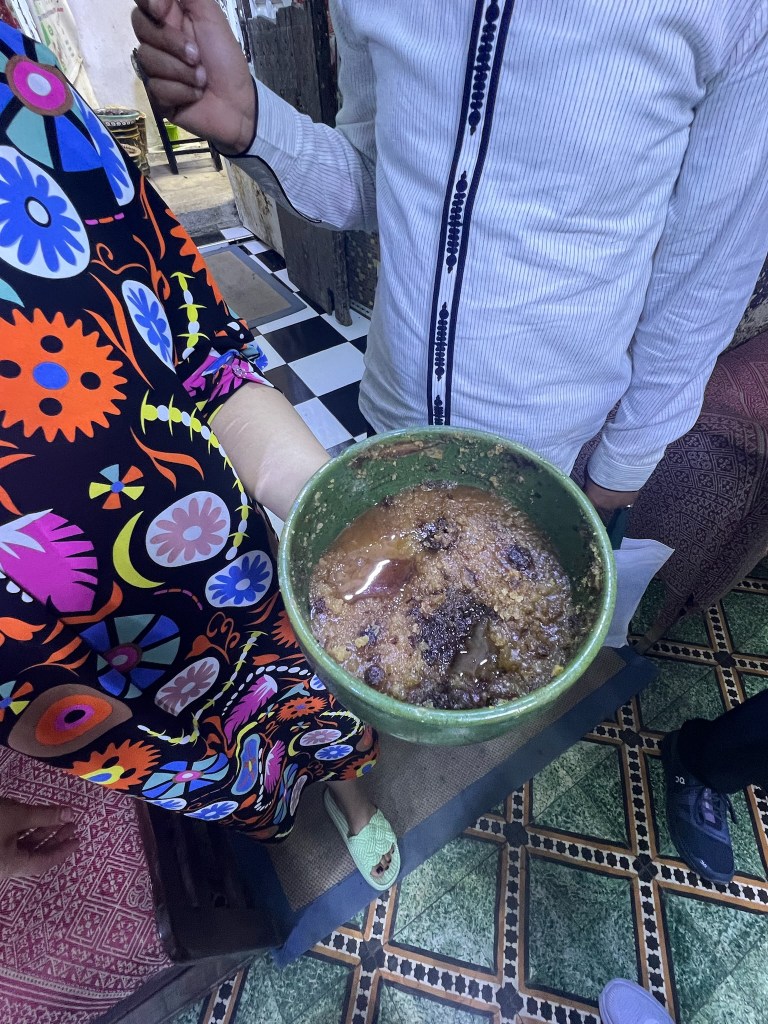

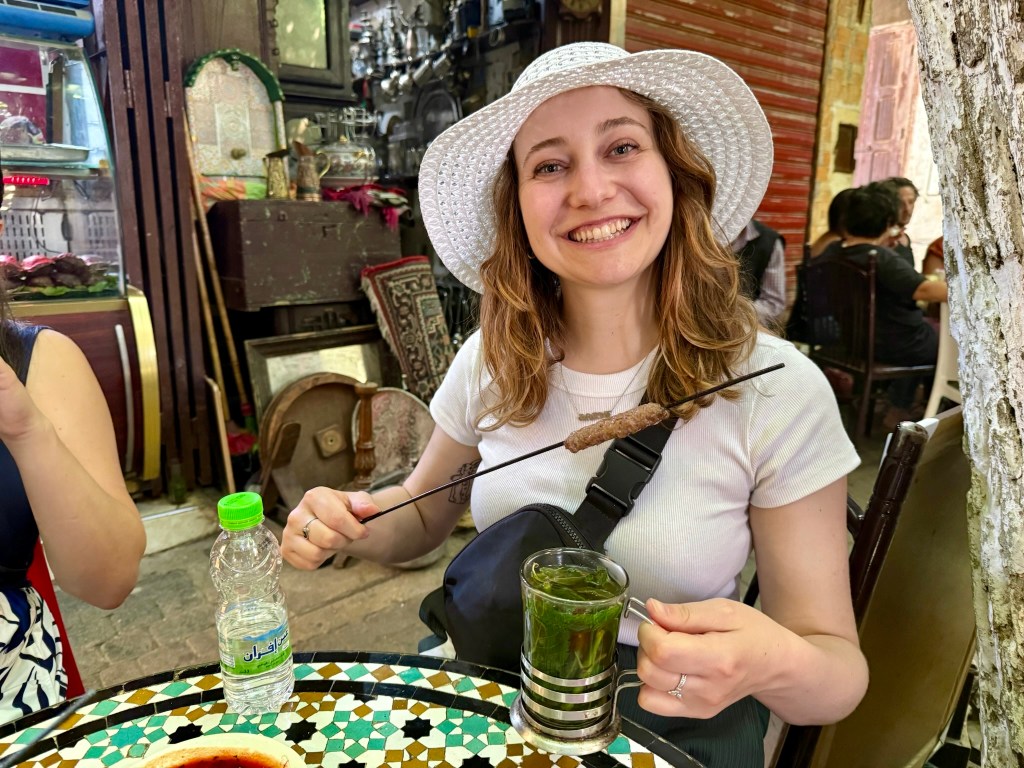
After the Fes tour, we decided to get dinner at a spot near our hotel. We sat outside, feeding scraps to the local cats, surrounded by other local families eating.
The family next to us ordered a full chicken, rice, and sides that everyone was picking at. Someone at the table noticed a child and his mom selling snacks on the street to make money. He simply invited the child to sit down and eat with them. They broke bread together without any judgement or questions. Once the family had finished, they left the table and the mother came to finish off the plate. Again, no judgement, just a human seeing another human in need and jumping right in. Once the mother and son finished, the last bits were fed to the community cats swarming the tables. No waste.

The moment I witnessed was not prompted. There were no cameras. No TikTok being made to inflate any egos. It was simply watching a slice of life and seeing how beautiful humanity can be when people practice what they preach. A lot of Americans have prejudices against the Islamic communities. If only people would get curious instead of getting combative, they may just witness something like that and have their entire perspectives shifted. It was hands down my favorite moment of our trip and has stuck with me even today. We could all be a little more kind and learn how to help our neighbors and fellow humans.
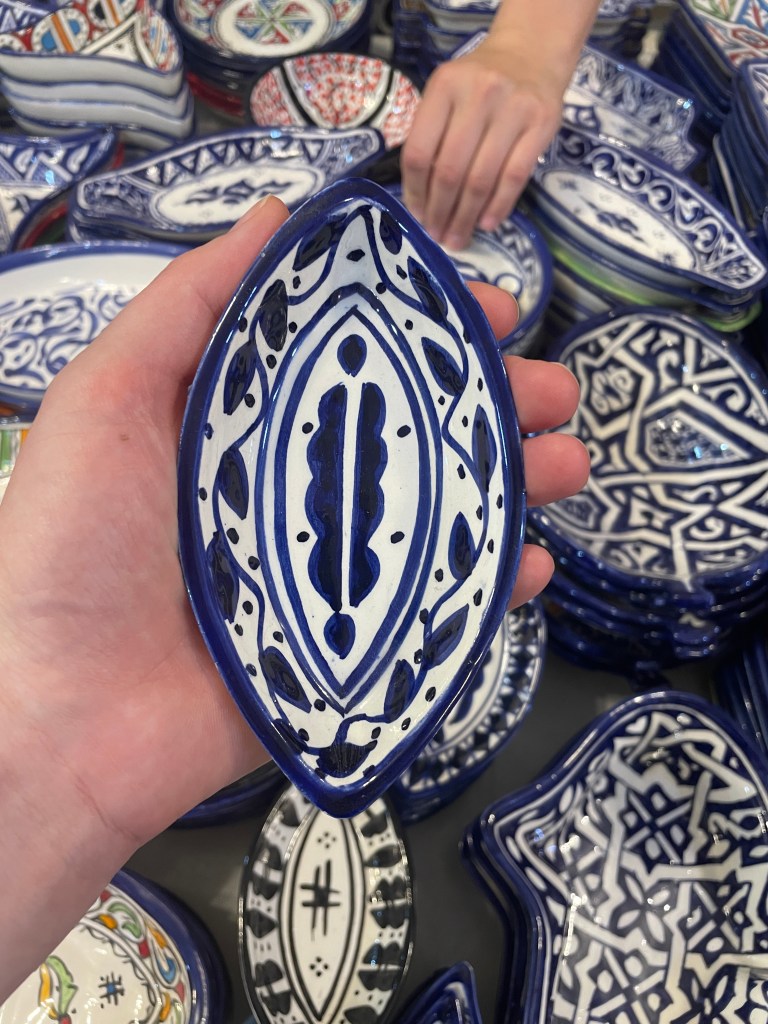
With that I will leave you for now, but the next blog post will focus on our stopover in Portugal. Until next time, please enjoy this photo of a pottery dish that is giving Lady Parts…


 Bonnie Gross
Leave a comment