
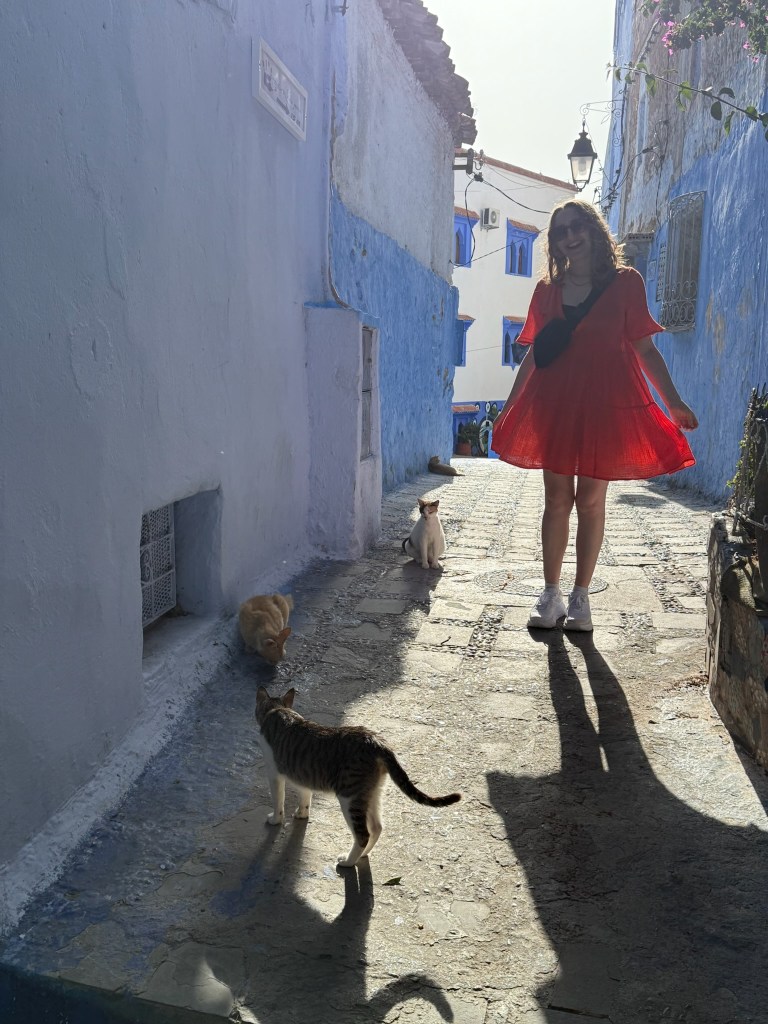
“Here the animals are seen as souls that are taken care of by the community. If a cat wanders into the mosque, you are not allowed to kick it out.”
Welcome to Chefchaouen, otherwise known as the Blue City. We had another local tour guide walk us through the city streets. Can you guess his name? It was also Abdul. It is like the Michael of Morocco.
The town was founded in 1471 by Moulay Ali Ben Rachid, a distant descendant of the Prophet Muhammad. The original settlement consisted of just a small fortress, now referred to as Chefchaouen’s Kasbah. The fortress was built to help defend the area from potential attacks by Portuguese invaders. Portugal was launching attacks against northern cities and towns in Morocco. I know, what a shocker.

Along with the Berber tribes of the region, many Andalusi Muslims, Moriscos and Spanish and Portuguese Jews settled here during and after the Reconquista, when Spanish Christians conquered what remained of the Muslim-controlled parts of the Iberian Peninsula. In 1948, Chefchaouen was 70% Muslim, 20% Jewish, and 10% Catholic, but now it is 98% Muslim after a mass exodus of Jews when Israel was established.
The name “Chefchaouen” is of Arabic and Berber origin. “Chef” is a derivation of the Arabic word “to look”, and the Berber term “Echaouen”, meaning “antlers” or “horns” refers to the peak of mountains. Put it together and Chefchaouen means ‘look at the horns’, referring to the two mountain peaks overlooking the area.
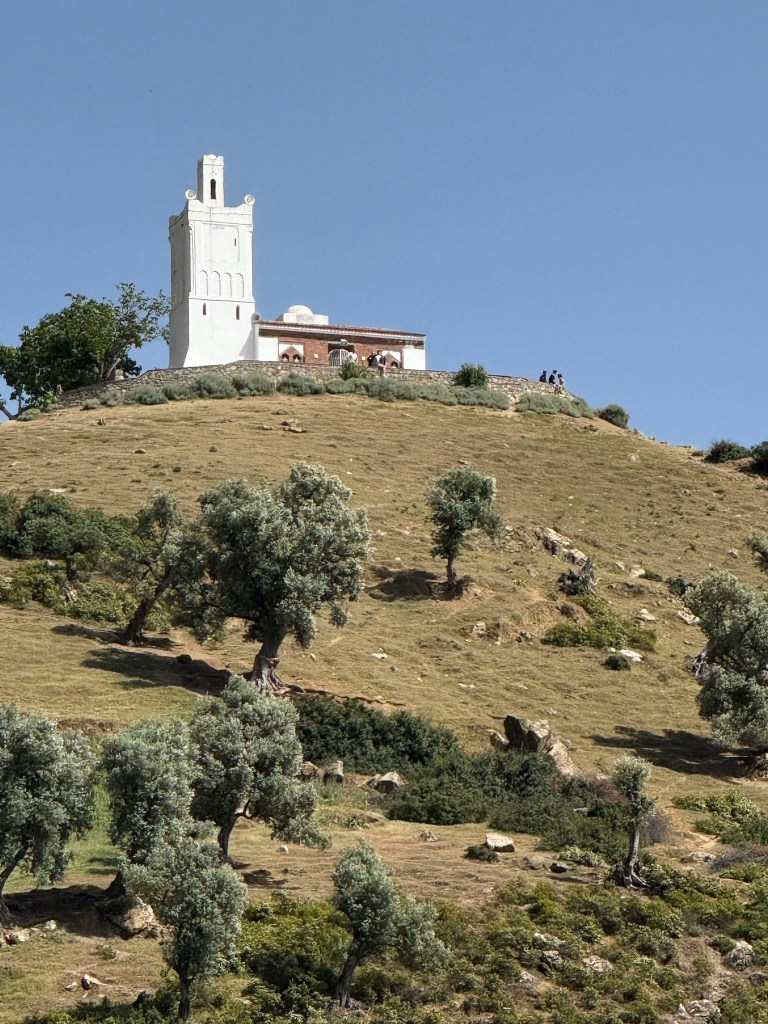
If you look at the mountains you can see the fortress wall, which is the same color as the mountains. A great tactic to confuse conquerors, especially with the natural protection of the mountains and river. Also on the mountain top is a Mosque that can only be accessed directly by foot.
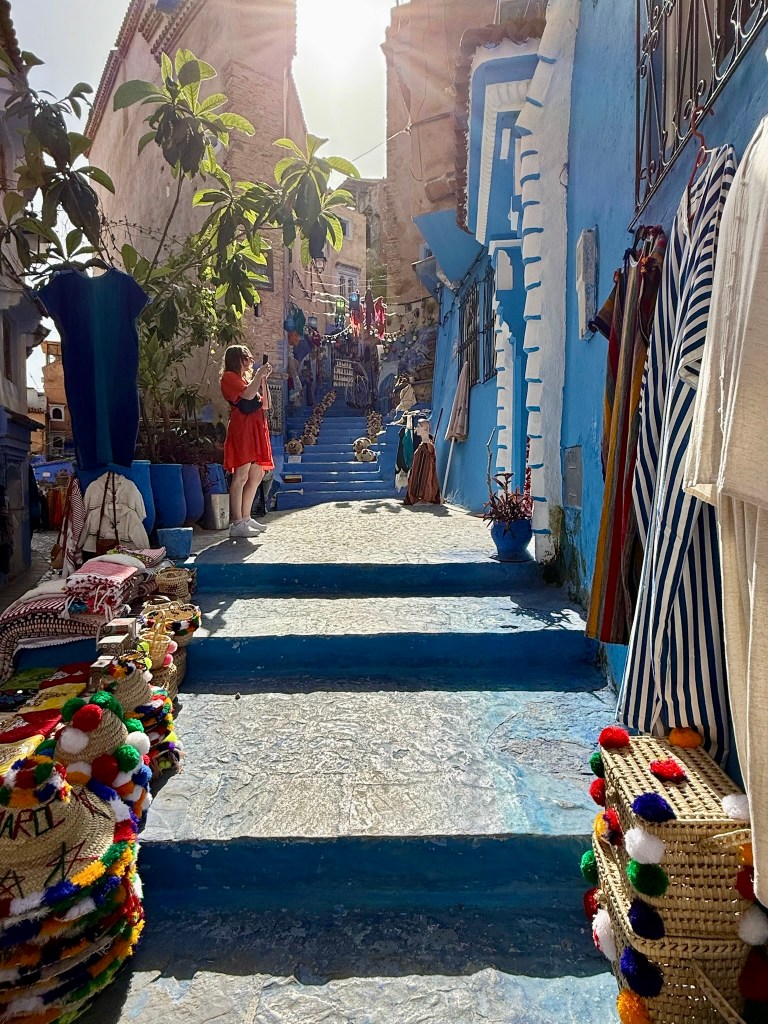
Many people are curious why the city is painted blue, but there isn’t one straight answer. In fact, the city has 3 colors – blue, white, and brown. As I mentioned above, the brown color provided camouflage in the mountains from the Portuguese invasion. The white color was due to the limestone, which is a natural mosquito repellent. Not to mention white also attracts less heat and helps to cool down the city. The blue color is more up for debate. According to our tour guide, the people of Chefchaouen painted the town blue as it was the color of the Jewish people, and they wanted to welcome them into the town with peace. Another theory is that the blue is said to symbolize the sky and heaven and serve as a reminder to lead a spiritual life. There is also the rumor that the walls were mandated to be painted blue in the 1970s to attract tourists.

Although the homes here were built in the 1st and 2nd century, they had natural air conditioning, where people used the same systems that caves had. If only they could’ve done that in the pre-war buildings in NYC.
The city is surrounded by a 5km wall with 7 gates. Of course there is only 1 gate you can use to travel back in the day, because how else would they charge you taxes? See nothing has really changed.
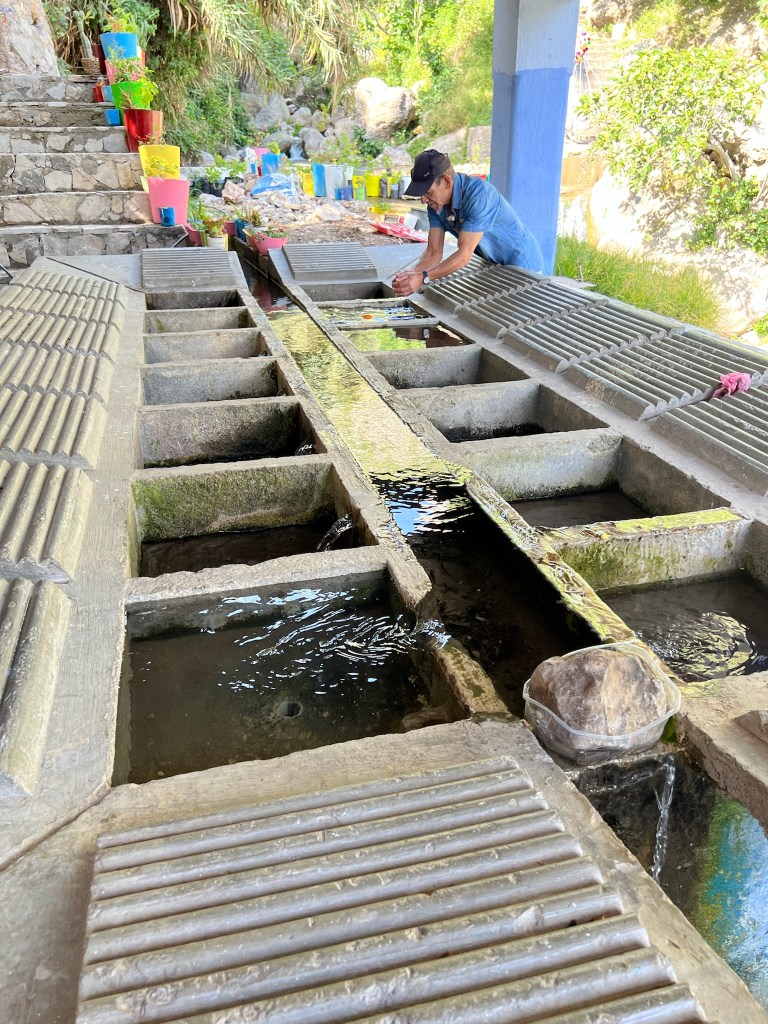
As in many Moroccan cities, there were features built in for the community, including the community laundry. The clean water flows down from the mountains into these stones, and for residents who are used to the minerals it is even drinkable. Again, that is only for people who grew up drinking these minerals, not for tourists.
Around the cities, you will notice a great deal of cats and even stray dogs. Here the animals are seen as souls that are taken care of by the community. If a cat wanders into the mosque, you are not allowed to kick it out. You are to welcome all living things. As you walk, you’ll notice bowls of water and milk left out for the furry friends and even some food pellets.
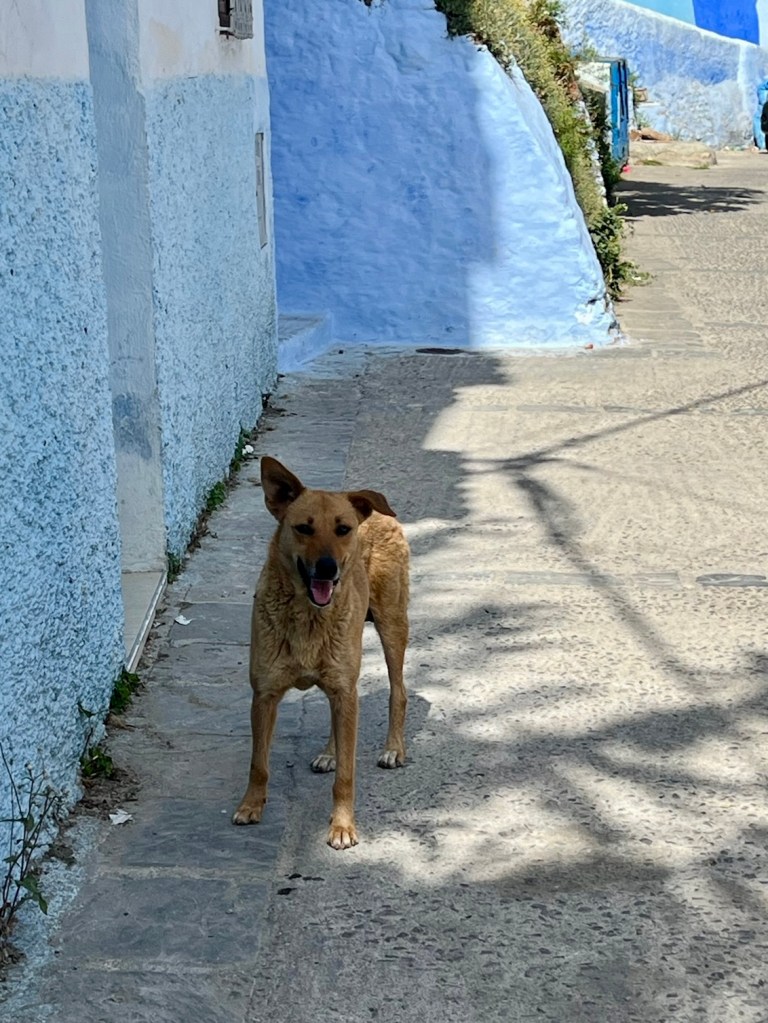

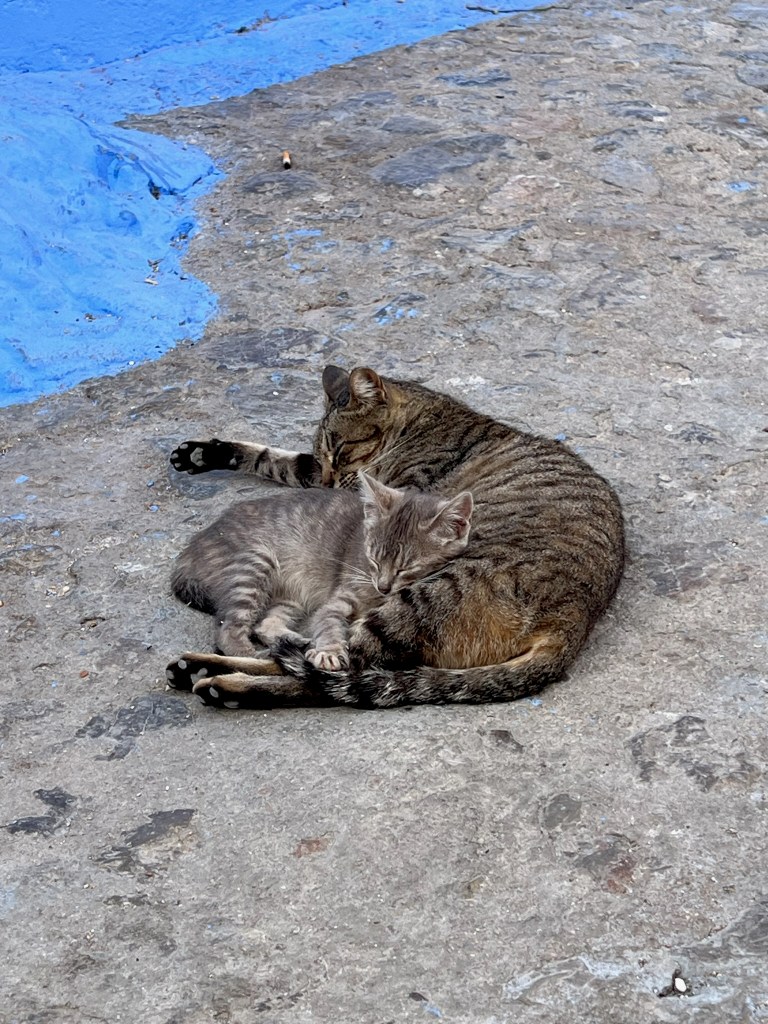


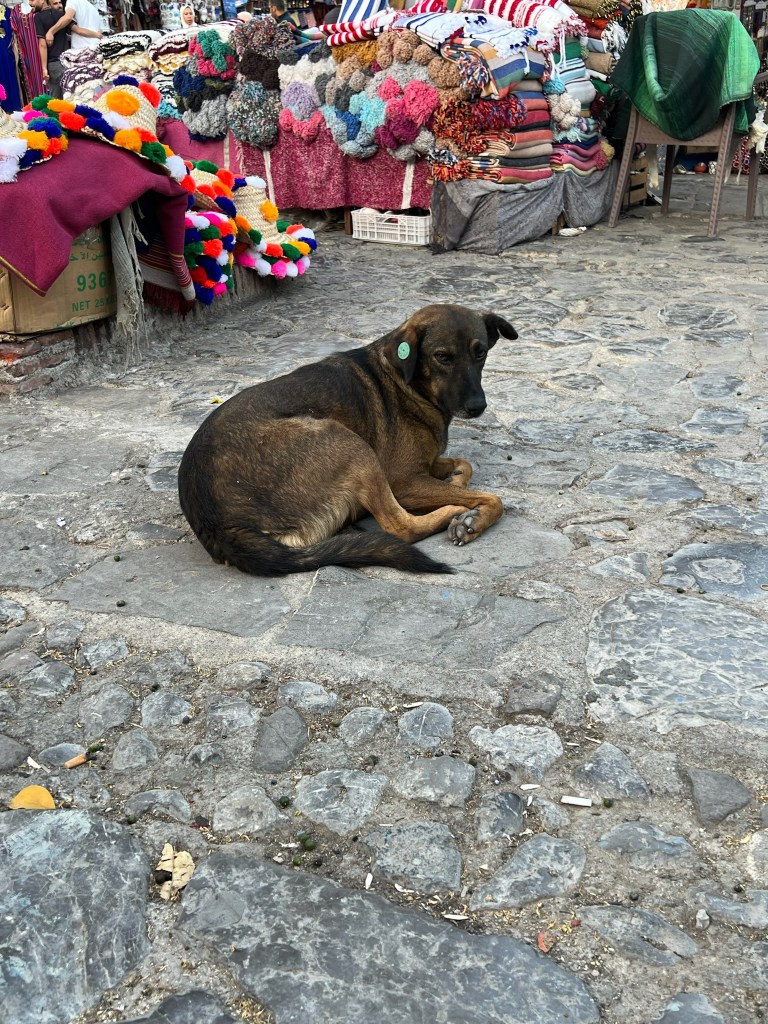

The dogs have identifiers on their ears. This means that the dog has been vaccinated and fixed. There is a huge effort to try and do this for all the furry friends out on the streets, but of course that is way easier said than done. Our tour guide has 2 outdoor cats. They greeted him at the end of the tour, along with a stray dog that tends to visit him from time to time. The dogs were extremely friendly and you could see people from the community always going up for pets or to give food.

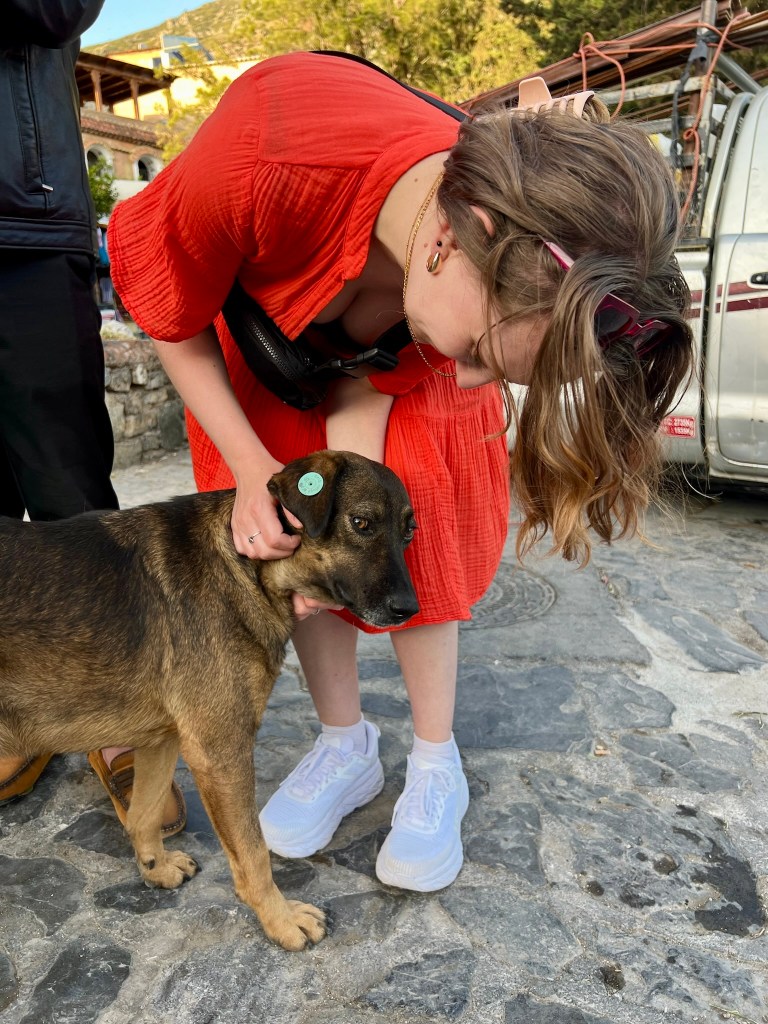
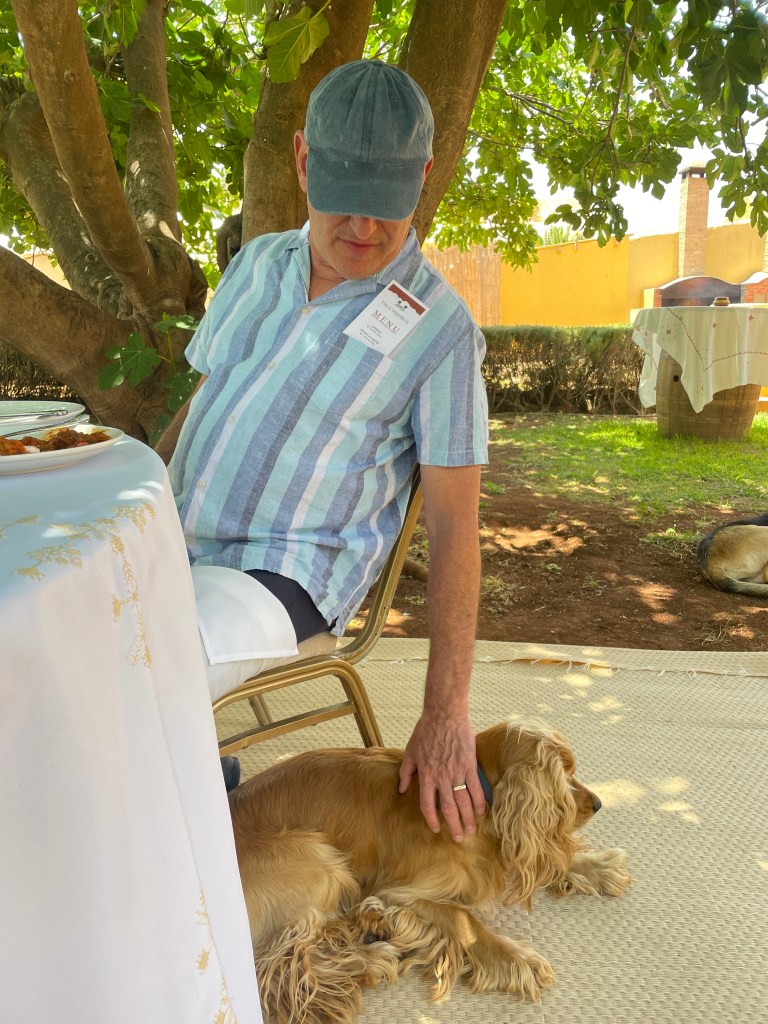
I also included photos here from our trip to a winery in the Meknes region because we got swarmed by strays that are now part of the vineyard. Wine tasting with fresh food surrounded by dogs. Is this heaven?


Chefchaouen also has a community oven. Abdul explained that there are specific time periods for cooking specific foods depending on temperatures. The mornings are for bread, afternoon for tagines, and the evening for pastries.
Numbers in Islamic cultures, and around the world, hold a deep significance. Designs in the tiles and the city itself were set up according to these numbers, the most significant being 7, as it is a symbol of good luck. To name a few famous sevens: seven seas, seven continents, seven days in a week, seven colors of the rainbow, and seven phases of the moon.
The blue streets are a huge Instagram opportunity. French Montana even filmed his music video for Famous here with Daddy Yankee, both Moroccans. The blue door below was also used as a backdrop of a photoshoot with Cristiano Ronaldo. You will notice the door has 2 knob heights. The higher is for the men and the smaller is for the women. This way you knew who was knocking and could make sure you were covered depending on who was entering the home.

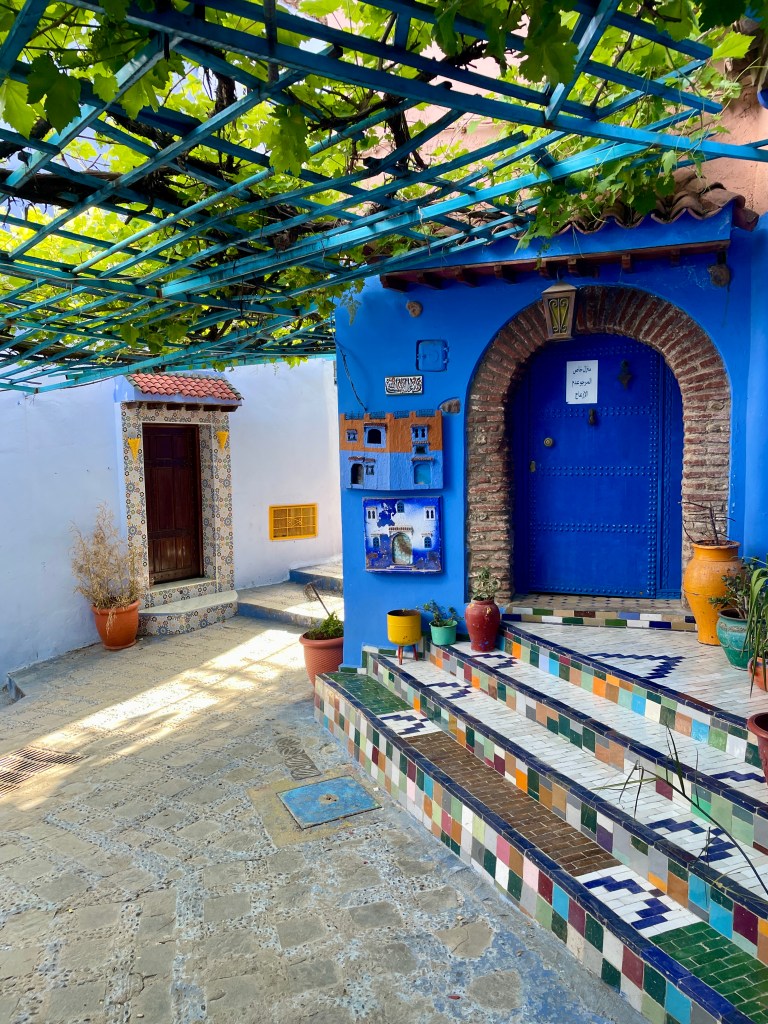
There was also a street named “Calle Saida Horra,” which was named after Sayyida al Hurra, one of the most important female figures of the Islamic West in the modern age. She was a 16th-century Moroccan queen and ruler who was known for her naval prowess and leadership, earning her the title “pirate princess of jihad.” She was the ruler of Chefchaouen and Tétouan. Her father, Moulay Ali Ben Rachid, founded Chefchaouen and built a fortress there, which is now a museum.
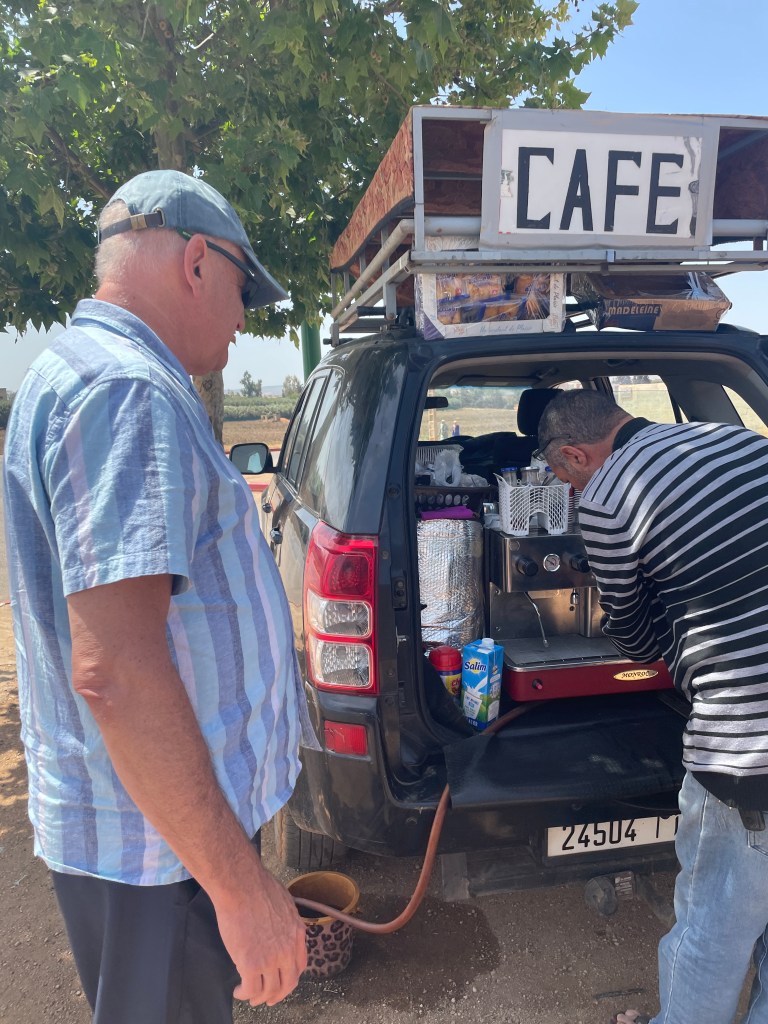
Before I continue to spew history at you, make sure to come back for more on Fes. Until next time please enjoy the coffee stop we made on the side of the road out of this guy’s trunk with a view of camels…

 Bonnie Gross
Leave a comment