
“As I’ve said before, change is inevitable and walking through this city is proof that even the biggest empires fall and make room for the next regime. And here I am in my own crumbling world, taking notes amongst the ruins.”
After Rabat we headed to Tangier with a few stops along the way. The first was the Hercules Caves. Our Tangier tour guide, Abdul, was with us for the caves and the Tangier city tour following. The cave is famous as many believe that the Greek god Heracles stayed and slept in this cave before doing his 11th labour, (one of the 12 labours which King Eurystheus of Tiryns had given to him) which was to get golden apples from the Hesperides Garden.
The opening is known as “The Map of Africa.” It is believed that the Phoenicians created the sea opening, which is in the shape of Africa when looked at from the sea.
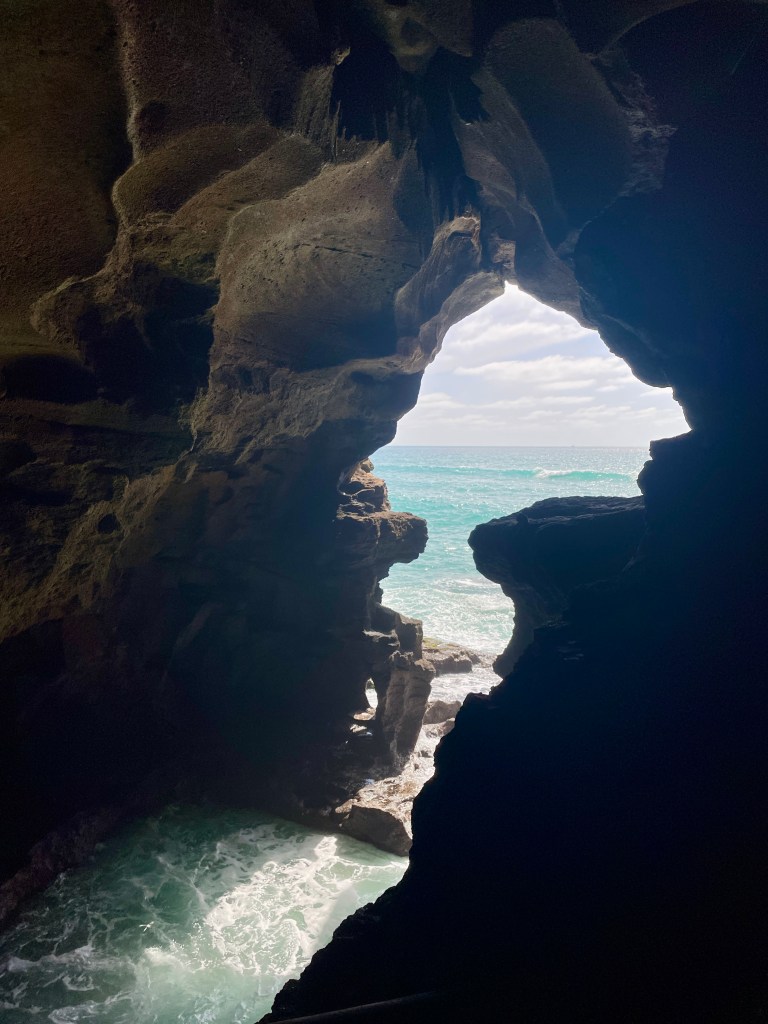
The cave itself is part natural and part man-made. In 6000 BC, the Caves of Hercules were inhabited by Neolithic people, individuals who lived during the New Stone Age. This is the time period where the chisel and hammer were invented, and remnants of the chipping away are still seen in the cave. Later on, the Berber people cut stone wheels from the walls, to make millstones to create wheat and olive oil.

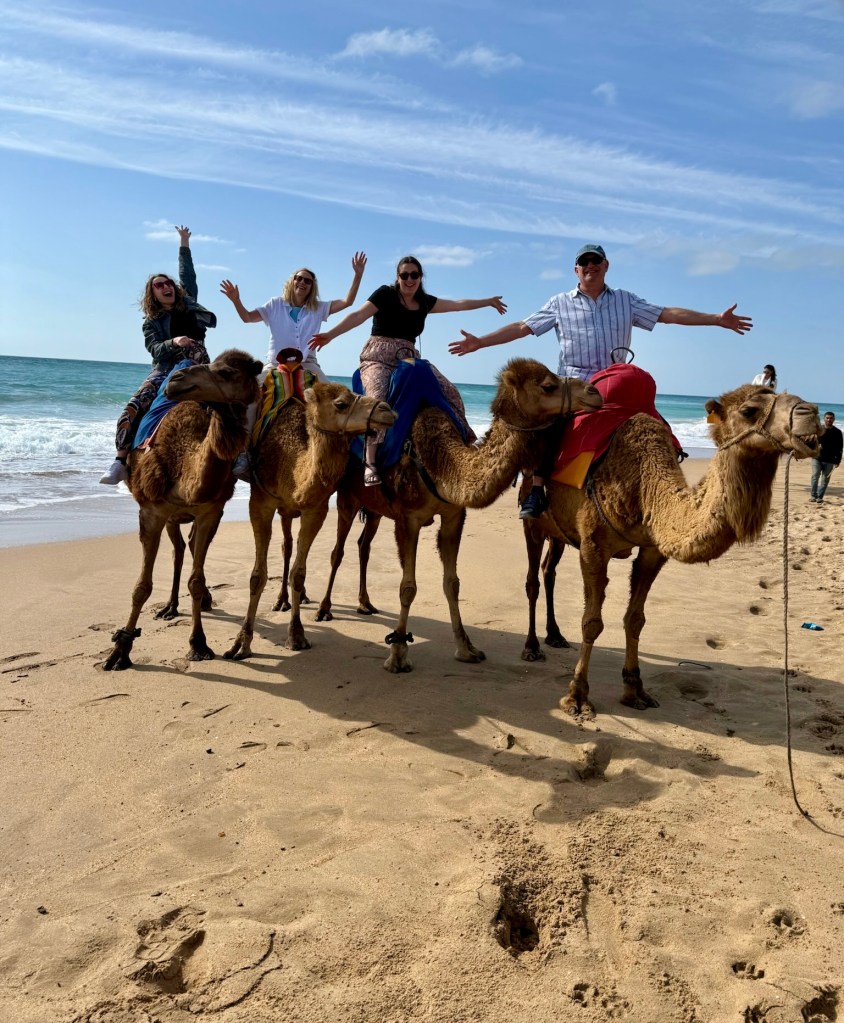
After the cave, we decided to do a family camel ride on the beach. In Morocco, camels are dromedaries, meaning they have one hump. These one-humped camels are native to the Middle East and North Africa. Here I was thinking all camels had multiple humps, but that is on me for assuming.
The next morning we did a walking tour of Tangier with Abdul. Like myself, Abdul was a huge fan of films and filmmaking and even talked in great detail about the movies shot right here in Tangier, including 007 Spectre. If you are a real film lover you can visit Ouarzawood, the largest film set in Morocco, where things like Gladiator and Game of Thrones were shot.


Tangier is located up north, where you can see the outlines of Spain and Gibraltar. It was founded as a Phoenician colony, possibly as early as the 10th century BCE, due to its amazing location for trade on the coasts of the Mediterranean Sea and the Atlantic Ocean. Like most advantageous spots for trade and military, the area was conquered by European powers time and time again throughout its history.
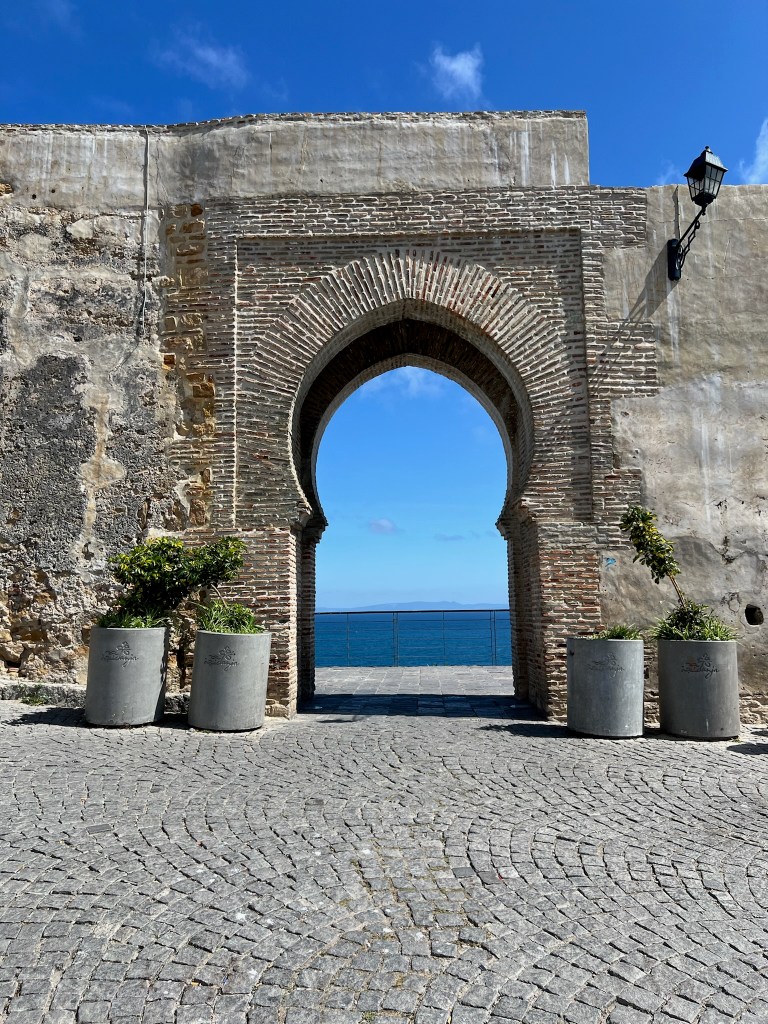
From the 18th century, Tangier served as Morocco’s diplomatic headquarters. The United States dedicated its first consulate in Tangier during George Washington’s tenure as president.
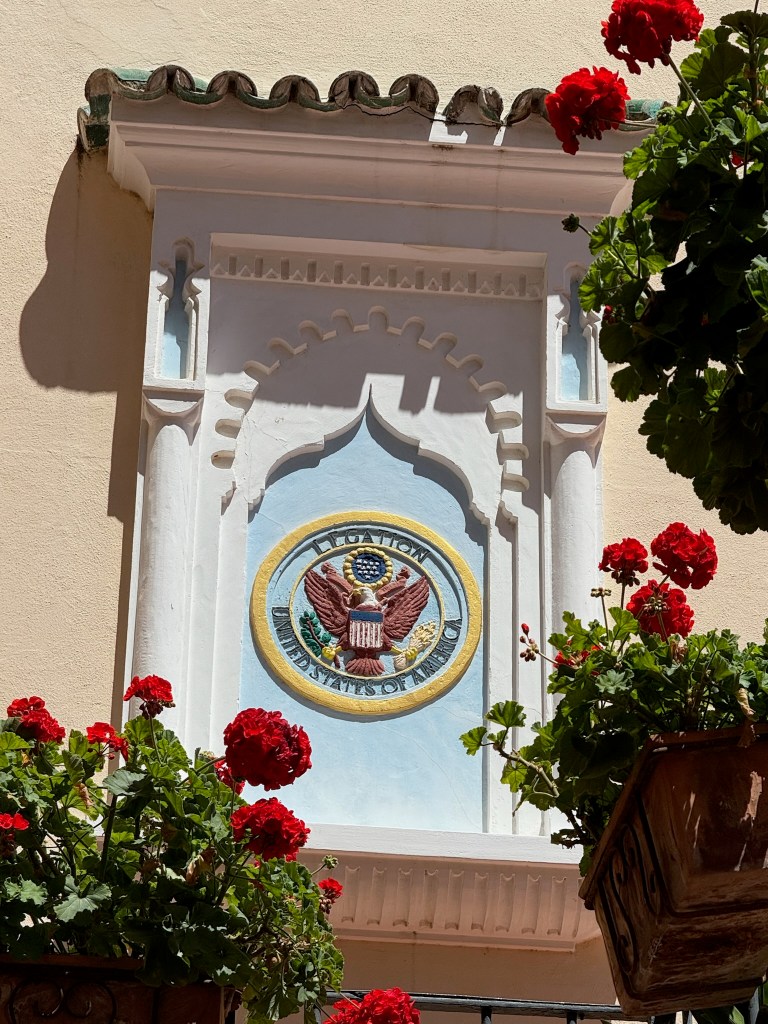
In 1923, Tangier became an international zone managed by colonial powers. That status came to an end with Moroccan independence and Tangier joined with the rest of Morocco following the restoration of full sovereignty in 1956.
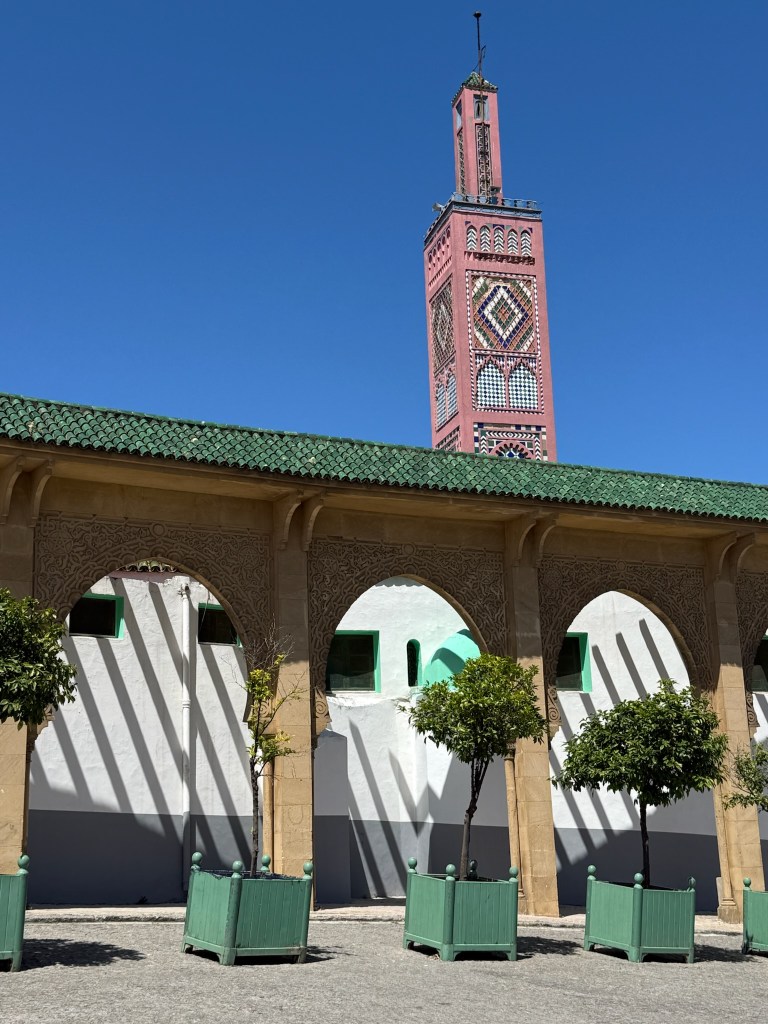
We also visited the medina in Tangier, and walked through “Place du 9 Avril 1947,” which is a square in Tangier, Morocco, named after the date of Sultan Muhammad V’s speech calling for Moroccan independence.
What stood out to me the most was the kindness of the people here in Morocco and how big a part community played in their lives. I talked about the community ovens, but there is also a sense of caring for your neighbor that I do not feel here in the States. That is not to say that everyone in the USA is an asshole, but the friendliness and welcoming we felt was beautiful and took me by surprise, especially as a jaded New Yorker.
We seem to have stepped away from communities and instead focus so much on our own little bubbles. In this world we do need to focus on ourselves, but I feel like we have lost so much of what makes us alive, which is coming together as a community.
Although I am going a bit out of order, I wanted to include some information on our stop in Volubilis, a UNESCO World Heritage Site that was occupied from the 3rd century BC to the 18th century. To no one’s surprise, our tour guide for Volubilis was also named Abdul.
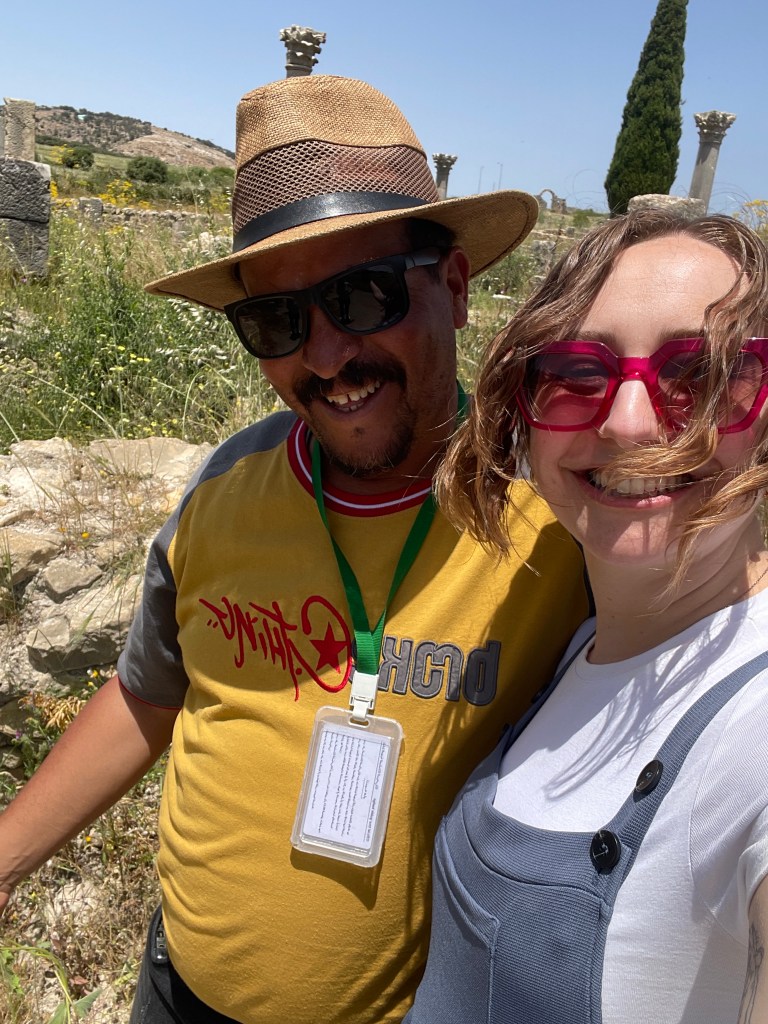
The site grew rapidly under Roman rule from the 1st century AD due to its fertile lands perfect for agriculture, the mountains with natural hot and cold springs, along with olives and fava beans. Fava beans were actually very important because they stopped diarrhea. It’s like the Roman version of Pepto-Bismol.
The area also had carob fruit, which is where the measurement of a “karot” comes from, as it used to be used to balance diamonds and gold.
The area was excavated by the French, during the French rule over Morocco. Of course the French took the statues to the Louvre. So far only 10 hectares out of 40 hectares have been excavated. To no one’s surprise, only the areas of high society and the rich have been uncovered. Like every culture, they had slaves, who would go on to build the aqueduct. The city once hosted 20,000 people and 5,000 slaves. The area was destroyed by the 1755 Lisbon earthquake, leaving the houses 3-5 feet below ground.

The city fell to local tribes around 285 AD and was never retaken by Rome because of its remoteness and indefensibility on the south-western border of the Roman Empire. It continued to be inhabited for at least another 700 years. In the late 8th century it became the seat of Idris ibn Abdallah, the founder of the Idrisid dynasty of Morocco. By the 11th century Volubilis had been abandoned after the seat of power was relocated to Fes. Much of the local population was transferred to the new town of Moulay Idriss Zerhoun, about 5 km from Volubilis.
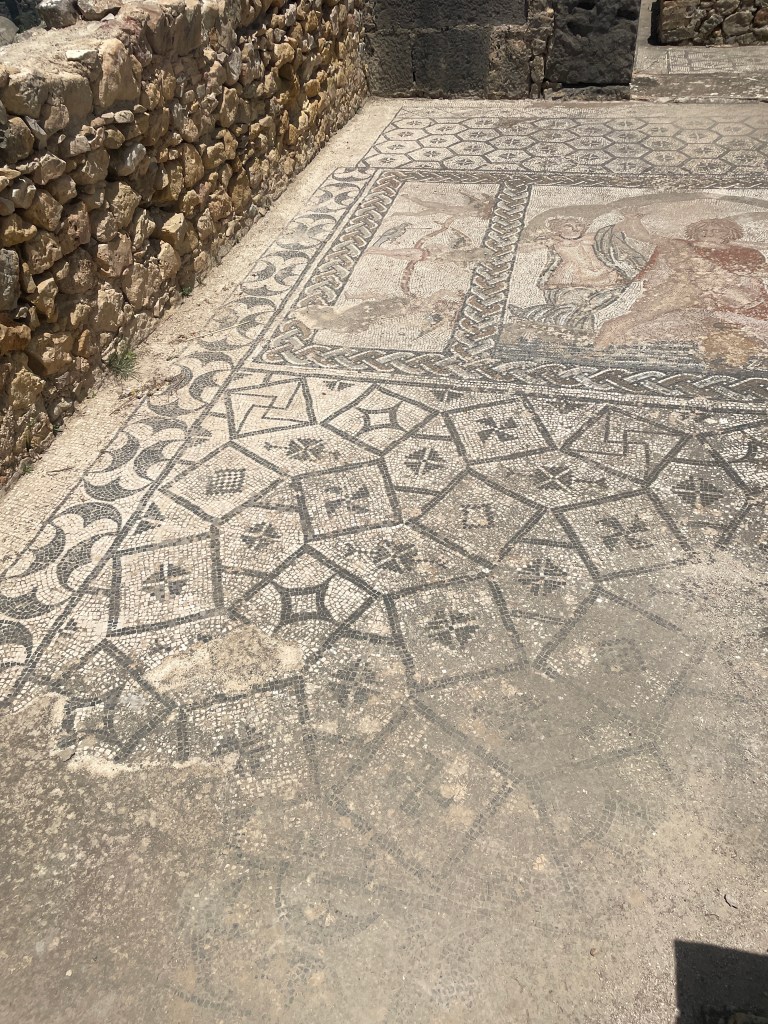
The mosaics you can see are relics of the Romans, specifically the wealthier families. Some of them still have Berber designs, while others that have faces are from the Roman period. You will notice a pattern that looks like a swastika, but at this time it has a completely different meaning. It was the Berber version of something similar to ying yang, going left to right and then right to left.

The rich houses had luxury features such as private baths, bakeries, fountains, and mill stones for olive and wheat. The ultra rich even had fish aquariums and vomitoriums. A vomitorium was a vomit area. The people would indulge and over stuff themselves with food, go vomit, and then eat more. It’s like the Hunger Games.
While the rich may have their own private baths and vomit spots, the poor have public places for this, including public baths, fountains, and laundry areas. There was also a public lavine where men and women would take shits together. They would channel water through the spring to clean their butts, so basically a bidet. The bathroom became a popular place for political talk, or “talking shit.” See, the Romans, they are just like us.
The main road was 2-way, making room for horses and chariots. The middle line was for sewage, which of course flows down to the river where the poorer population lives. The slaves would hand pump water into the baths for the rich and even wash them. Their houses would even have rooms for hot water and cold water since it would stream directly from the springs.
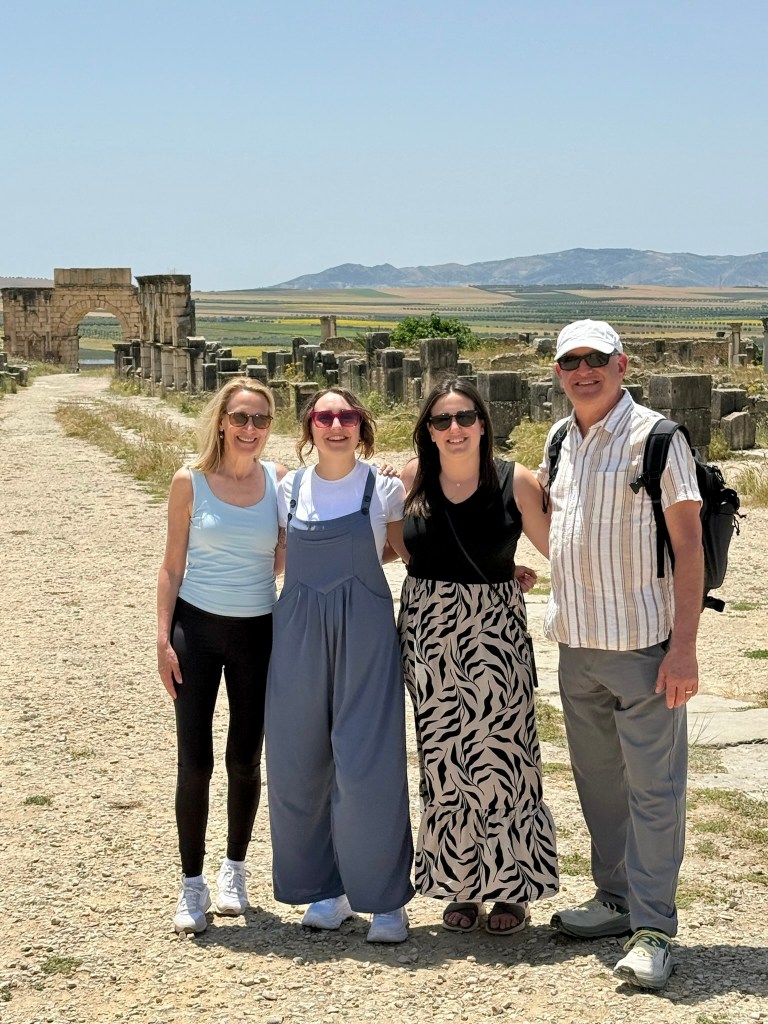
Enough shit talk Bonnie!
As I’ve said before, change is inevitable and walking through this city is proof that even the biggest empires fall and make room for the next regime. And here I am in my own crumbling world, taking notes amongst the ruins.
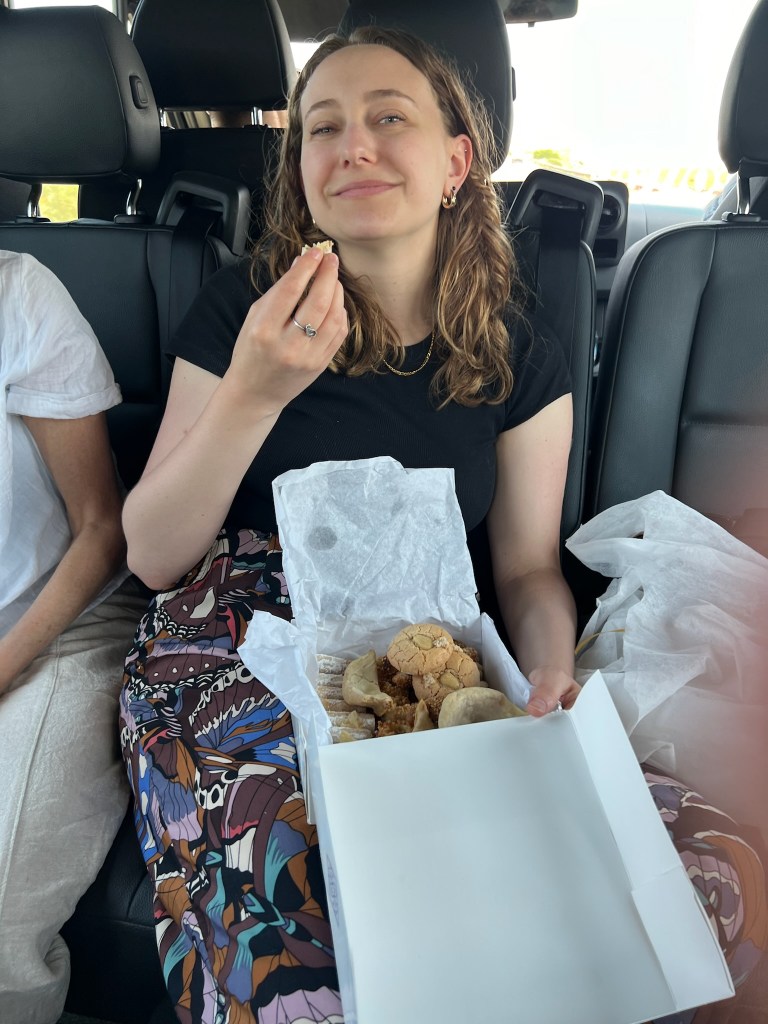
Next up is the Chefchaouen (The Blue City), but until then please enjoy this photo of me enjoying the cookies from Casablanca a little too much…
 Bonnie Gross
Leave a comment