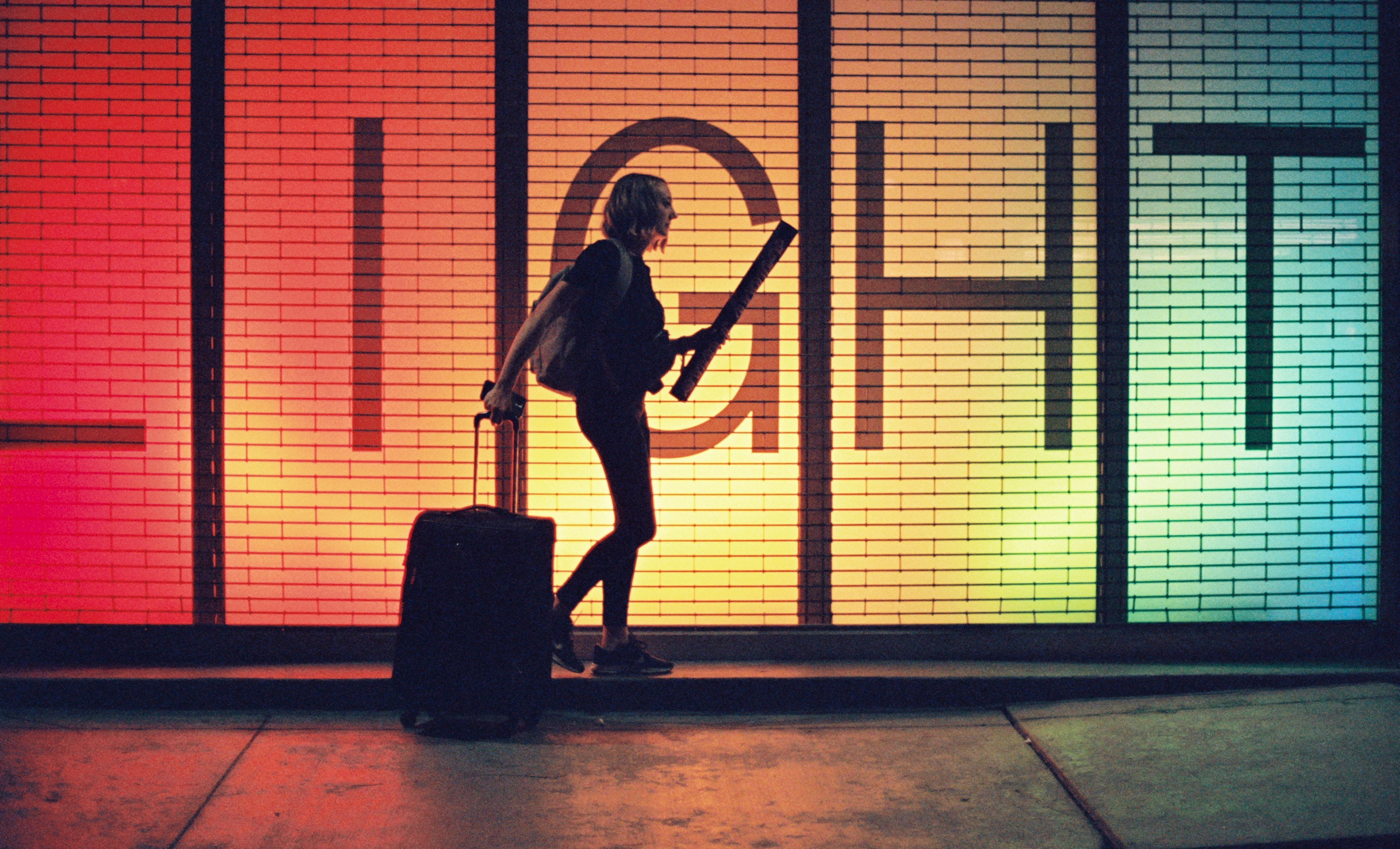

“Disruption was inevitable and necessary for all the best things in my life. So here I am, like a phoenix burning my life down again to start anew, standing in Morocco at sites older than Jesus, where castles burned, civilizations died and birthed again in a cycle of change. “
They say there’s only one inevitable in this life – death. But I’ve come to find another one – change. Sometimes we are driving it and other times we are grabbed by surprise and thrust into the unknown. Either way all things end – jobs, relationships, projects – and yet as change forever continues, the world keeps turning at the same pace.
That’s where I found myself after a Teams meet, our whole office laid off, staring at my ceiling as water leaked down from a pipe that had burst on the 3rd floor. Change was pouring on me, quite literally. As with anything in life, it was now all about how I handled it.
As I found myself working odd jobs and starting up a new business, while staying up with Lady Parts festivals, I had a trip planned to Morocco & Portugal fast approaching. Because you can plan all you want, but rain still happens on a wedding day.
I boarded the plane because I could be anxious in my apartment, or I could be anxious walking the ancient streets of Fez on a food tour. To quote the cinematic masterpiece The Polar Express (no I will not be taking any arguments I low key love this movie), “One thing about trains… it doesn’t matter where they’re going. What matters is deciding to get on.”
Disruption was inevitable and necessary for all the best things in my life. So here I am, like a phoenix burning my life down again to start anew, standing in Morocco at sites older than Jesus, where castles burned, civilizations died and birthed again in a cycle of change. As they once stared off into the same sea, they never imagined a tourist like me would be taking a photo of the ruins of their whole lives. If cities burned and civilizations started anew, well my life was bound to make the same cycles in my miniscule here on Earth.
You can either jump head first or be pushed, either way you’re getting in the water. Let go or be dragged. Reinvent yourself again. Don’t worry you’ve done it plenty of times before, but now with each time comes more wisdom. And one day my life will be half-built brick ruins that people snap photos of in a UNESCO heritage site, wondering what I must have been thinking when the world burned down around me.
I threw on my arch supportive Hokkas and began my next journey. First stop: Casablanca! Here’s looking at you kid! It is the country’s largest city as well as the business and economic centre.
We were picked up by our driver throughout Morocco Siad, who was one of the sweetest people I’ve ever met. He was taking us city to city and then each city would have a local guide to take us around. Our Casablanca guide was named Miloud and already we were family. After flight delays we told him we were looking for coffee and immediately we stopped at a local cafe where we sat and got to know each other first before going on the walking tour. It was our first introduction to the famed mint tea here. Miloud showed us the proper way to pour – three times then back into the pot, eventually pouring from a great height. I miserably failed and got hot mint tea all over my clothes.

The first stop was the Royal Palace of Casablanca, the main royal residence of the King of Morocco. The king is the monarch and head of state of Morocco. All of the king’s palaces cannot be entered unless you are part of the royal family or staff. The press and cameras/videos are not even allowed inside. No one knows what it looks like inside other than the royal family.
The King of Morocco currently has at least one residence in each of the country’s principal cities, sometimes going back to ancient times. They are often referred to as Dar el-Makhzen. ’House of the Makhzen’ using the Moroccan term for the monarchical institution. There are 24 total royal palaces, which you will see more of in the later blogs.
Mohammed VI (Sidi Mohammed bin Hassan al-Alawi) is the current king of Morocco, having ascended the throne on 23 July 1999, following the death of his father, Hassan II. The kings are all descendants of the Prophet Mohammad and until the most recent king, all marriages were done inside the family bloodline.
Fun fact: In 1777, Morocco’s monarch, Sultan Mohammed ben Abdallah (Mohammed III), became the first national leader to publicly recognize the sovereignty of the United States as it fought for independence from Great Britain.
The area that is today Casablanca was founded and settled by Berbers by the seventh century BC. It was used as a port by the Phoenicians, then the Romans. The Portuguese consequently bombarded the town into ruins in 1468. The town that grew up around it was called Casa Branca, meaning “white house” in Portuguese. Of course to not surprise, the Spanish and French followed suit. In 1906 French colonists arrived and The Treaty of Algeciras formalized French preeminence in Morocco. Morocco gained independence from France in 1956. That is a very brief history, but you get the point. The European powers yet again came in and colonized. Some things never change.
We made a stop at a local bakery for some pastries where we got to see the community oven. A communal oven is an oven that the community members share and use together. In Morocco, using a communal oven to bake your bread and other baked goods is common. The ovens are run by workers whose primary job is to bake the edible goods of the community in the large oven, the majority of which is bread. A lot of Moroccan culture was heavily community based and the ovens were such a wonderful way to come together. Breaking bread together. Sharing food. Some of the oldest ways we as people come together.


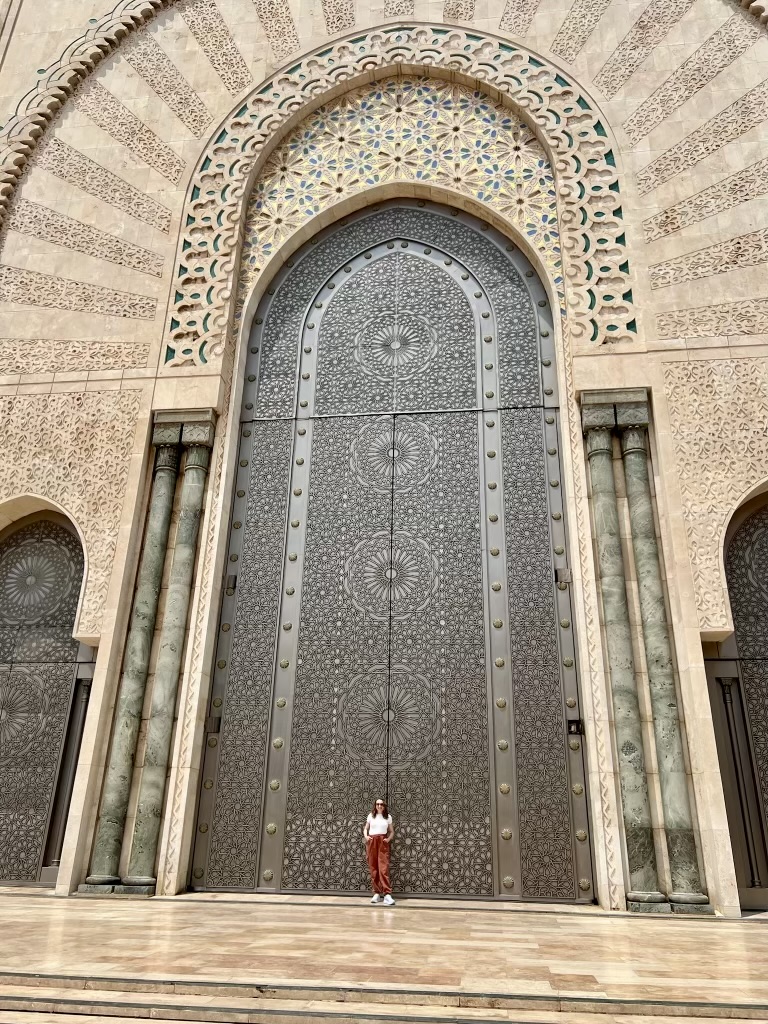
The last stop of this tour was the Hassan II Mosque, which is the second largest functioning mosque in Africa and the 14th largest in the world. All the materials used to build the mosque were made by Moroccan artisans except the lights. The green color you will notice in a lot of these buildings is linked to Islam, peace, and nature. The 3 balls on top represent the 3 major monotheistic religions (one God) – Islamic, Christianity, and Judaism. A symbol that we can all come together and we have more in common than apart. A sign of community and peace.

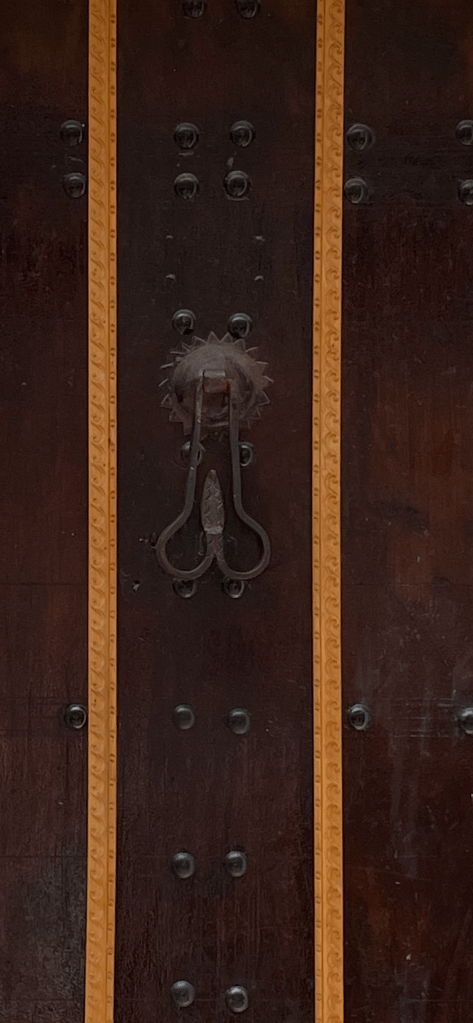
More to come on Morocco! Until then, please enjoy this photo of this door knocker…
 Bonnie Gross
Leave a comment